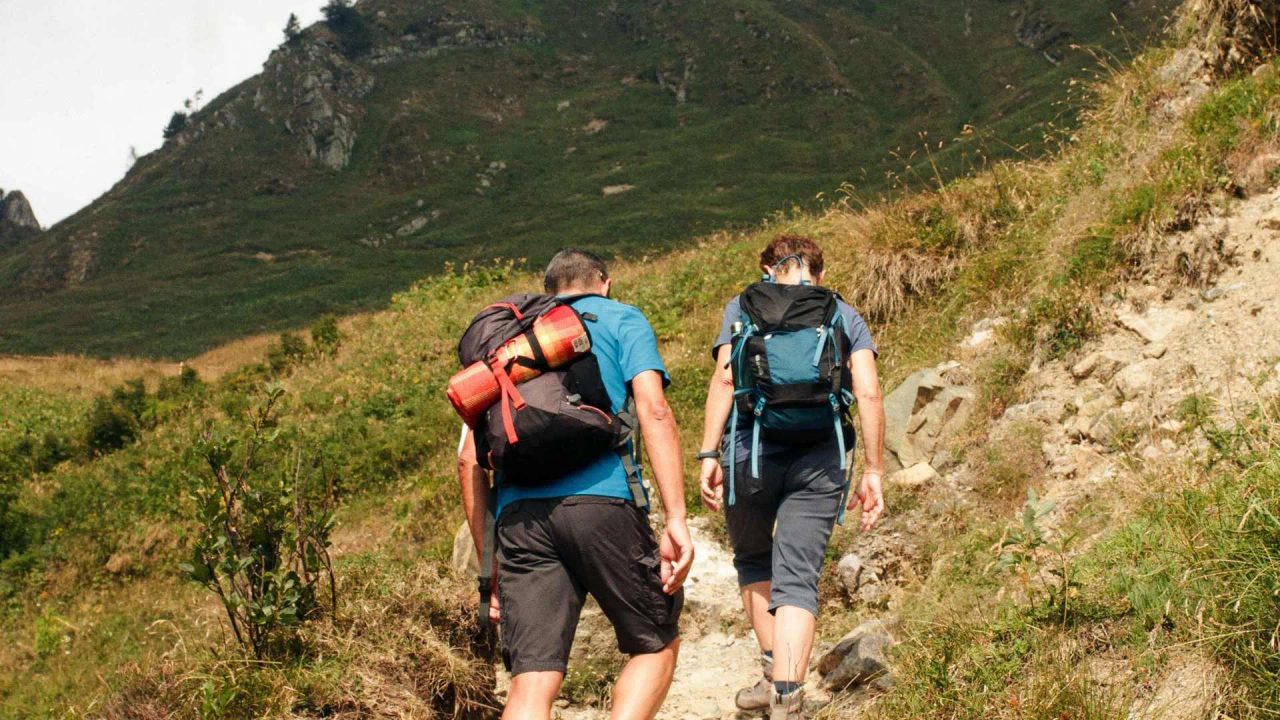
How wonderful is trekking? Anyone who has laced up boots and grabbed walking sticks would probably say very much so, especially when the trails let you discover places you might otherwise never come across. Today we explore some 4-day trekking routes to do in our peninsula, playing smartly with a few limitations: no mountain trekking (too easy to talk about trekking in the Dolomites)!
This means that all lovers of walking will be happy to immerse themselves in a nature that is not strictly alpine, discovering some routes born from religious and commercial reasons and only later becoming something more.
We at Meeters have been organizing events for many years and through this experience we have gained the necessary knowledge to suggest this or that route. Tackling the stages of a 4-day trek, perhaps together with someone met on site, is the best way to fill your heart with many emotions to carry with you in times of need.
That said, let's discover four very interesting treks!
The Way of the Gods
The Way of the Gods is perhaps the most famous 4-day trek in all of Italy, as well as the third most frequented trail in our beautiful country. This route, of very ancient origin, dates back to the pre-Etruscan and then Roman periods and is a true millennial path, quite different from the Path of the Gods which runs along the Amalfi Coast.
The Way of the Gods is a route of about 130 kilometers running between Bologna and Florence, with daily elevation changes between 600 and 1000 meters; this makes it undoubtedly challenging but still accessible to those with some experience in this kind of adventure.
To complete the Way of the Gods in 4 days, you need to cover about 30 kilometers per day, averaging 8 to 9 hours of walking without breaks; a fairly athletic pace but one that can easily be extended to 5 or 6 days to reduce daily walking hours and include some detours for breathtaking views to savor.
Among all the treks in Italy this is one of the best organized since there are many farm stays and B&Bs along the way, and you will never lack grocery stores, bars, or restaurants.
The only thing to be careful about is the presence of hunting areas: these trails are patrolled during weekends, especially early mornings, by hunters, and hearing gunshots is never a pleasant experience!
The Blue Wild
The Blue Wild is a very evocative name, perhaps even too much, for one of the most difficult loop routes in all of Italy. Due to isolation, technical demands, and length, this trek is recommended only for those with significant experience since it is a cliff-hanging crossing lasting 4 to 6 days along the entire Gulf of Orosei.
The start is from Pedra Longa, near the town of Santa Maria Navarrese, and it extends over high cliffs, overhangs, Mediterranean scrub, and ledges. An important feature to keep in mind is that, unlike other routes, nights are spent in bivouac with sleeping bags and mats.
The wild nature, if it wasn't clear, is the driving element of the entire experience, becoming even more evident in the last two stages that involve double rope descents, very steep climbs, and countless breathtaking views.
No villages, then, but only a holiday that truly tests your feet.
The Final Stretch of the Via Francigena
We conclude this article by talking about the Via Francigena, or rather, its final part. The Via Francigena is the name given to a very long route that runs from Rome to Canterbury, England.
In four days of not too intense walking, you can enjoy the stretch from the borders of Lazio, the upper Tuscia, to what was the starting/ending point of the entire route, namely St. Peter's Basilica.
This route starts from Acquapendente, the so-called City of the Pugnaloni known for the presence of the saint, then passes through the Treja Valley Park and the Monte Gelato Waterfalls; from here you reach Campagnano and the Veio Regional Park in Rome. From the park, you reach the town of Formello and at Isola Farnese you reach the Cassia, a historic Roman road and the undisputed access point to St. Peter's.