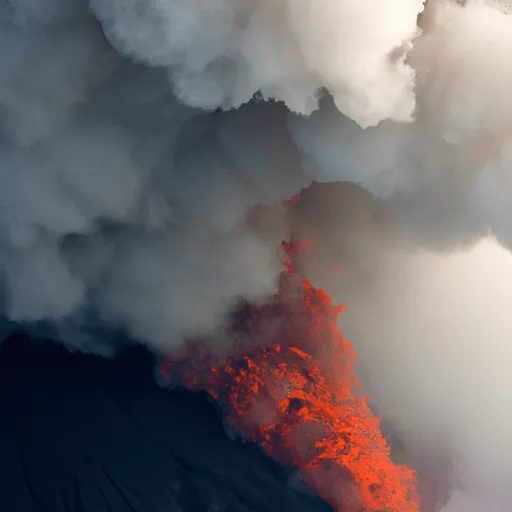
Nyiragongo is a volcano that rises majestically in the Democratic Republic of Congo, within the stunning Virunga Mountains. This volcano is not only a majestic geological formation but also a phenomenal source of study for scientists and an adventurous attraction for bold travelers. The story this volcano has to tell is rich with fierce eruptions, breathtaking landscapes, and an active lava presence that continues to capture the imagination of those who dare to explore its grandeur.
Located within the Virunga Mountains, Nyiragongo is one of the most spectacular volcanic formations in the world. This volcano stands out for its intriguing geological history, characterized by frequent eruptions and a constant presence of active lava in its crater. The lava flows here are particularly fluid and dangerous, capable of causing significant damage to surrounding areas.
Composition and Eruptions
Nyiragongo's current structure results from the fascinating overlap of two older volcanoes, known as Baruta and Shaheru. Composed mainly of pyroclastics and lava flows, this volcano emits ultramafic and alkaline-rich lavas. This unique composition gives Nyiragongo's eruptions extraordinary fluidity and mobility. In fact, lava flows can move at incredible speeds, reaching up to 100 km/h.
Nyiragongo's Eruptive History
Over the decades, Nyiragongo has written an impressive eruptive history. Since as far back as 1882, this volcano has erupted at least 34 times. Often, eruptive activity has been accompanied by the formation of an active lava lake within the crater. One of the most memorable eruptions occurred in 1977, when the crater walls suddenly collapsed, causing a rapid draining of the lava lake. This event generated a lava flow that moved at impressive speeds, reaching 60 km/h and causing considerable damage and loss of life.
The 2002 Eruption
Another major eruption took place in 2002, when a fissure opened on the volcano's southern flank. This led to lava flowing out that threatened the city of Goma, putting surrounding communities on alert.
Constant Monitoring and Precautions
The Goma Volcanological Observatory (GVO) constantly monitors Nyiragongo's activity. Scientists collect seismic and temperature data to assess volcanic activity and predict possible future eruptions. This monitoring is essential to ensure the safety of people living near the volcano and to inform decisions of travelers wishing to explore this natural wonder.
A Unique Adventure in the Heart of the Volcano
A trip to Nyiragongo is a unique experience offering the chance to get close to the active lava lake within the crater. This breathtaking spectacle is captivating and mesmerizing but must be approached with caution. Due to volcanic activity and potential threats such as carbon dioxide toxicity, it is crucial to take precautions during the visit. Travelers need to be informed about travel requirementsincluding yellow fever vaccination, and must carefully follow expert guidance to ensure their safety.
Conclusions
In conclusion, Nyiragongo represents not only a volcano but also a window into the power and beauty of nature. Its fascinating eruptive history, fluid eruptions, and active lava lake are testaments to Earth's unstoppable force. Exploring this volcano requires boldness and respect for nature, but the rewards are priceless: a close-up view of one of the most spectacular and mysterious phenomena on our planet.
Nyiragongo is a volcano located in the Democratic Republic of Congo, within the Virunga Mountains. The volcano has an interesting geological and volcanic history, characterized by frequent eruptions and an active lava lake in its crater. Nyiragongo is known for its highly fluid and dangerous lava eruptions, which can cause significant damage to surrounding areas.
Its current shape results from the overlap of two older volcanoes, Baruta and Shaheru. Nyiragongo is mainly composed of pyroclastics and lava flows. The lavas emitted by the volcano are ultramafic and alkaline-rich, characterized by a low silica content and a lack of feldspars. This composition gives Nyiragongo's eruptions particular fluidity and mobility, which can lead to lava flows moving at extraordinarily high speeds, up to 100 km/h.
Nyiragongo's eruptive history has been marked by numerous eruptions over the decades. Since 1882, the volcano has erupted at least 34 times. Eruptive activity has often been accompanied by an active lava lake within the crater. In 1977, one of the most significant eruptions caused the crater walls to collapse and the rapid draining of the lava lake, resulting in a lava flow that reached speeds up to 60 km/h and caused severe damage and loss of life.
Another major eruption occurred in 2002, when a fissure opened on the volcano's southern flank, leading to lava flowing out that threatened the city of Goma.
Nyiragongo is constantly monitored by scientists from the Goma Volcanological Observatory (GVO), who collect seismic and temperature data to assess volcanic activity and predict potential eruptions.
A trip to Nyiragongo is a unique experience offering the chance to observe the active lava lake within the crater up close. However, due to its volcanic activity and potential threats such as carbon dioxide toxicity, it is important to take precautions during the visit. Travelers must be aware of travel requirements, including yellow fever vaccination, and follow expert advice to ensure their safety.