Are you eager to take a great trip to Thailand, perhaps after reading one of our articles on the topic, but unsure how to stay safe? Traveling safely in Thailand is not as difficult as many believe: among the countries in that part of Asia, it is truly one of the safest, but it is still necessary to take the right precautions.
This is because Thailand, although generally attentive in the field of international cooperation, remains a country with a culture profoundly different from ours. Just take a look at the Ministry of Foreign Affairs website and check all the information related to neighboring countries to understand that, without caution, you risk quickly crossing into uncomfortable situations.
So, aside from the Green Pass, which we will discuss later, let's look at all the most important information for travelers to highlight in order to ensure everyone a comfortable experience in a country different from our own. Italy.
At Meeters, we have considerable experience in the travel world, striving for a long time to improve leisure time for as many people as possible. We believe in making new friends through sharing events and experiences, and in the value of travel as an element for personal growth and the joy of the brave.
Let's discover everything necessary to safely organize a great trip to Thailand, so you can explore this beautiful country.
Covid Rules
Let's start right away with the necessary but also terribly boring stuff: the Coronavirus.
At the moment, despite some last-minute changes, it is not necessary to show any proof of vaccination.
Exceptions apply to travelers coming from or going to countries that require an RT-PCR test.
These travelers must have COVID-19 insurance and a negative PCR test result.
Medical Assistance
In Thailand, medical assistance is guaranteed, and it is practically mandatory to enter the country with health insurance; this is because hospitals require some form of financial guarantee before starting treatment. If absent, it is possible to provide a deposit or a credit card.
There are restrictions on medications containing narcotic substances or for treating mental illnesses, but in such cases, it is best to inquire directly at the relevant consulate or embassy.
Where Not to Go
First of all, we strongly recommend traveling to Thailand mainly with organized tours; this is because the country is very large, and travel times can be long due to inefficient road transport.
If you want to organize a trip independently, there are areas best avoided: the southern provinces (Pattani, Yala, Narathiwat, Songkhla), border areas (presence of minefields), the border with Myanmar (extremely tense situation due to the conflict in Myanmar), the border with Cambodia, especially around the temples of Preah Vihear, Ta Kwai, and Ta Muen.
Driving and Transportation
Driving in the country is on the left, and the risk of accidents is quite high, also due to the large number of motorcycles and generally unpredictable and reckless driving.
It is also worth noting that rented cars and motorcycles do not always meet maintenance and insurance standards: in these cases, it is better to arrange rentals with internationally recognized companies.
Another thing to consider is the sector of water sports: although it is very easy to rent vehicles for these sports, it is necessary to know that safety measures and quality control processes are applied very loosely.
This means the best thing to do is to use only companies licensed by Thai authorities, backed by insurance coverage. Remember this for traveling safely in Thailand!
Additionally, it is essential to pay attention to the quality of vehicles used by transport companies. Checking that they are well maintained and comply with safety regulations can make a big difference. Also, check online reviews from other travelers: positive and negative experiences can provide valuable insights into a company's reliability and seriousness.
Don't forget to gather information about routes and timings, and always have a backup plan in case of unforeseen events. Finally, always keep the contacts of local authorities and your country's embassy with you: being prepared is the key to a peaceful and safe trip.
What Is Crime Like in Thailand?
Recently, there has been a slight increase in crime rates, especially in urban areas where the most common offenses are pickpocketing and motorcycle snatch thefts.
Again, the rule to follow carefully is sobriety and common sense. It is advisable not to wear valuables and to carry only small amounts of money, not to accept drinks or food from strangers in bars (nor leave anything unattended in bars), and to use only authorized taxis (such as those called by hotels).
Great caution is recommended when moving around and living alone during full moon parties on the islands of Koh Tao, Phuket, and Koh Phangan; statistically, rapes and violent crimes occur, often involving drinks that have been deliberately drugged.
It is therefore essential to adopt safety measures and prudent behavior during these events. Avoid accepting drinks from strangers, keep visual contact with your glass, and preferably buy and open drinks yourself to reduce risks.
Knowing local emergency numbers and the quickest way to get assistance can make a difference in critical situations. Full moon parties can be unforgettable experiences, but it is vital to prioritize your safety to ensure they remain pleasant memories.
Scams
Scams deserve special attention because during the years of tourism growth, Thailand has seen a great boom in ingenuity in this regard. Be especially careful with ATMs, especially in the most touristy places: the best thing to do is withdraw money from machines equipped with surveillance systems, preferably inside bank branches.
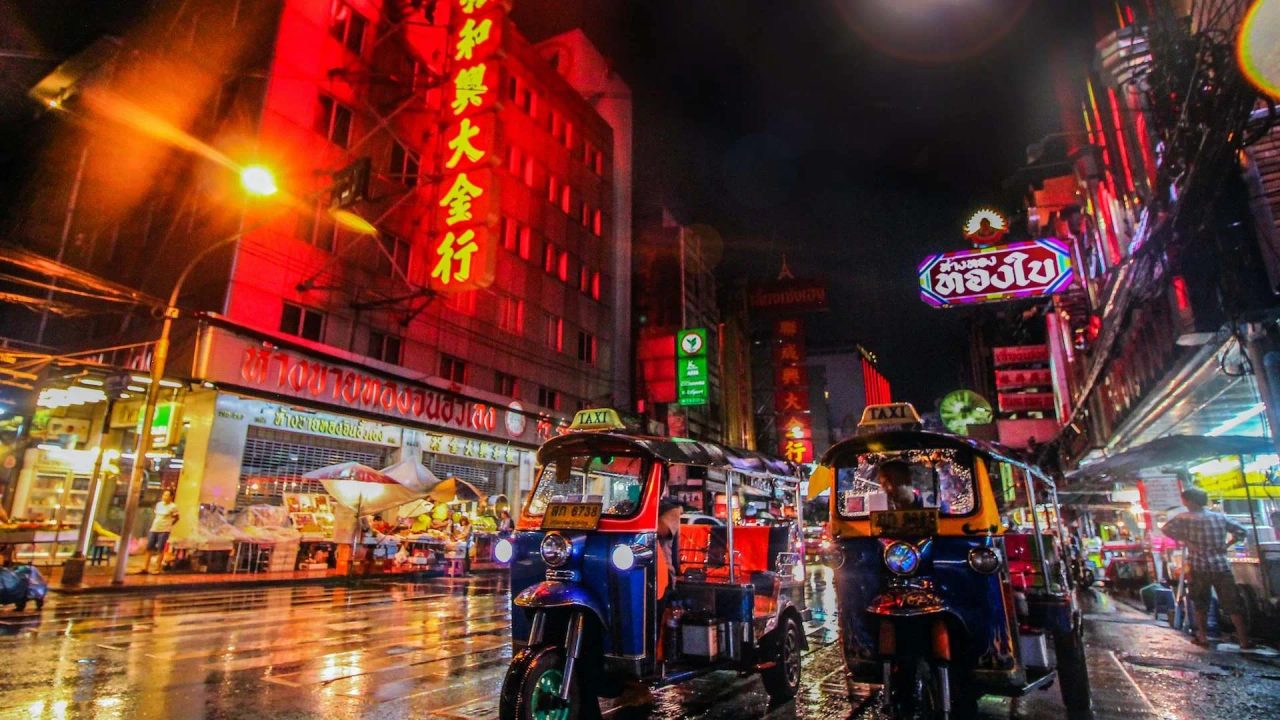
Also, another common scam involves taxis and tuk-tuks, especially in the most visited cities like Bangkok and Phuket. Drivers often refuse to use the meter and try to negotiate a fixed price, which is generally much higher than the actual fare. It is advisable to insist on using the meter or, better yet, use ride-sharing apps like Grab to avoid unpleasant surprises.
Another deceptive practice involves organized tours, where prices can be inflated and the promised experiences do not match reality. It is always good practice to book tours and activities through accredited travel agencies or trusted hotels. Finally, be cautious with street vendors and markets, where counterfeit products and price scams are common. Bargaining is customary, but it is important to do so knowledgeably and without losing sight of the real value of items.
Also be wary of locals who stop you on the street trying to sell precious stones or other goods. These scams, besides being blatant, do not reflect the reserved and shy nature of Thai people.
Specific Legal Information
In general, not respecting the law leads to penalties much harsher than in Italy; legal proceedings are complicated, and behaviors considered normal by us may not be so there.
Smoking on public beaches or simply possessing electronic cigarettes are actions that can lead to detention or heavy fines. Gambling with money is absolutely prohibited and also leads to detention.
A separate discussion should be made about the icons of the Thai monarchy: disrespectful statements and behaviors are framed under the crime of lèse-majesté and can lead to punishments of up to 15 years in prison. Even just crumpling a banknote with the king's image can cause problems, as can writing critical statements about the royal family on social media or the internet. Better not to forget this fact if you want to travel safely in Thailand.