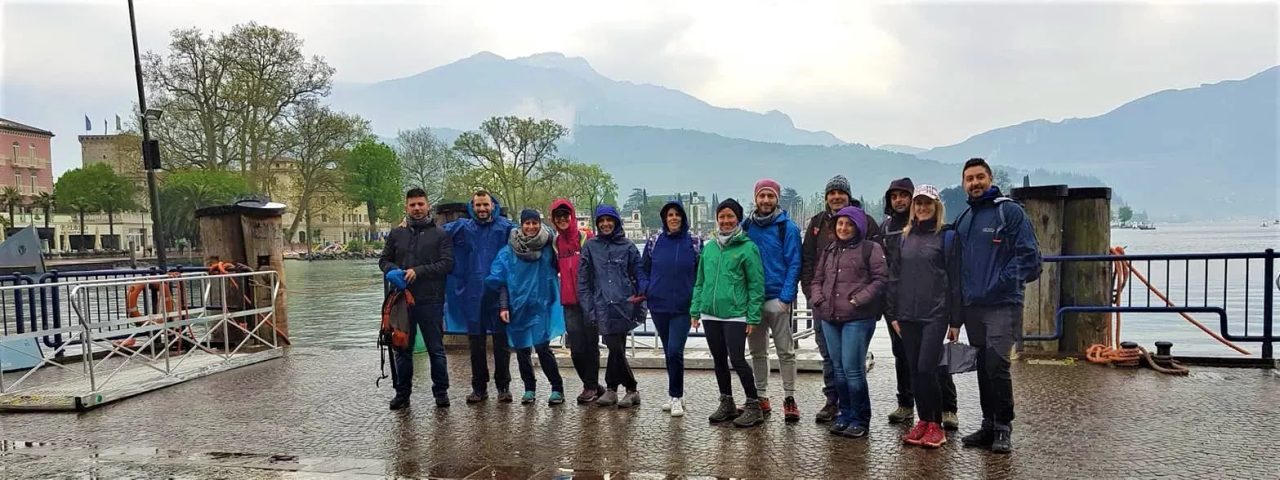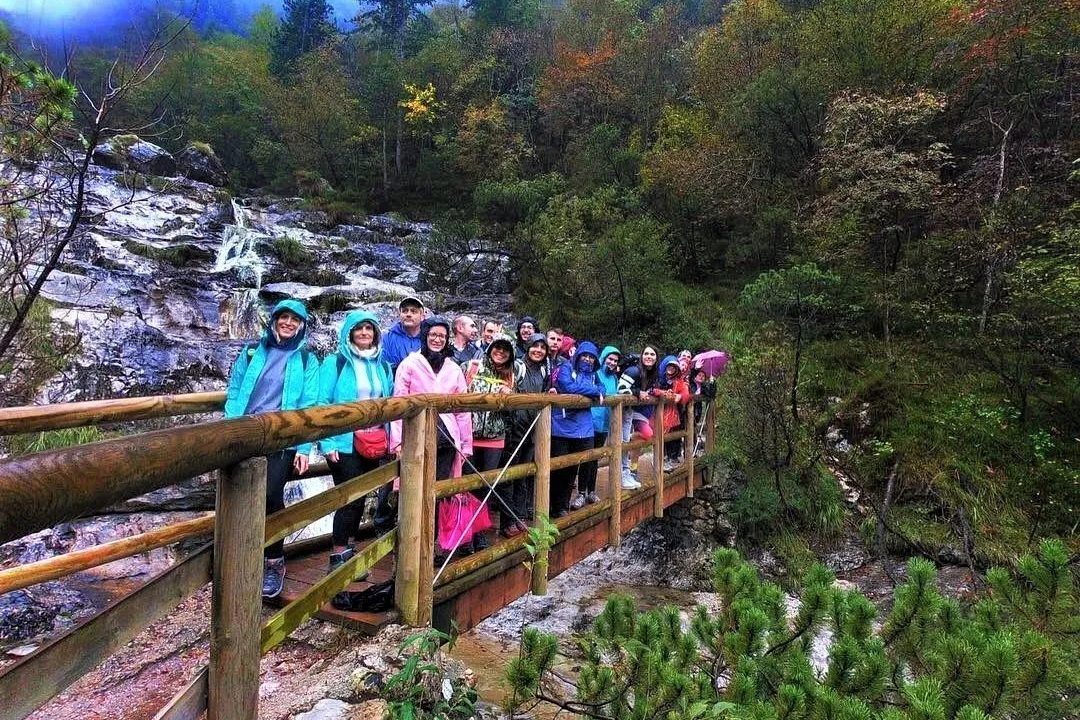
How many times, during a nature hike, have you encountered a sudden thunderstorm?
It happens to all mountain enthusiasts. When you spend days at high altitude, the weather often becomes unpredictable and sudden changes are frequent.
But don’t worry. You can go trekking in the rain!
By reading this article, you'll learn how to best handle these situations. If you face them with the right mindset and proper gear, you can even make your hike more fascinating.
Sounds impossible, right? Yet, think about it.
The rustle of leaves moved by the wind, the sound of raindrops hitting the rocks, the thunder echoing through the valleys… Trekking in the rain can become an even more intense and immersive experience. An experience that allows you to fully grasp the nature around you.
To truly feel these sensations you must never be caught unprepared, equipping yourself in advance with appropriate and reliable clothing.
Remember: the mountains are beautiful, but not a game. When you go hiking, especially in bad weather, technical and professional gear is necessary. Baden Powell, the founder of the scouts,also said: “There is no bad weather, only bad equipment.”.
So, below I’ll list the clothing you need to face trekking in the rain (including links to product technical sheets).
The clothing I recommend is always essential, even when you don’t have absolute certainty it will rain. Don’t forget these accessories: they’re quite affordable, compact, and you won’t even notice you have them!
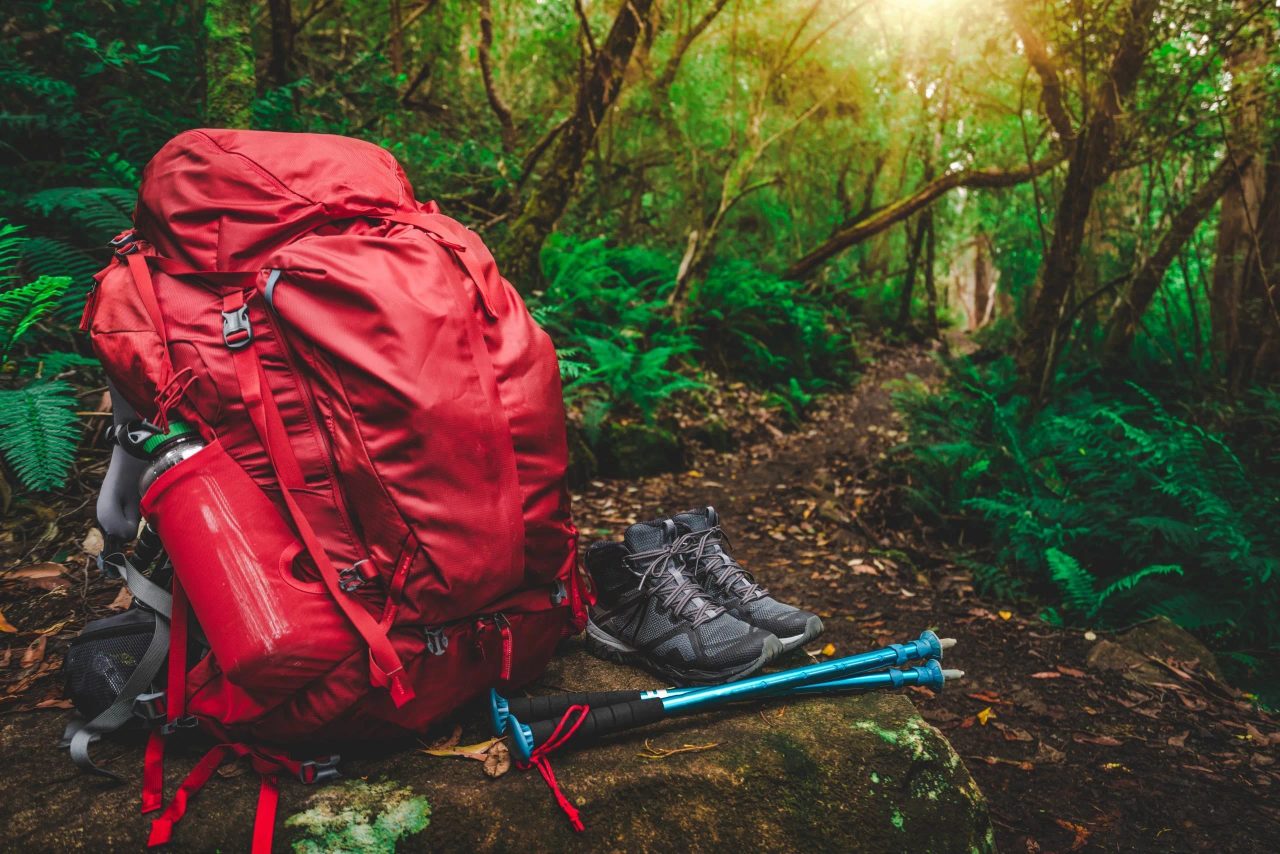
- Waterproof Trekking Shoes
Let’s start with footwear, fundamental for tackling any hike well. My suggestion is to always wear waterproof trekking shoes, even better if they have an outer membrane made of Gore-Tex. In case of showers, good waterproofing is essential to keep your feet dry.
If the bad weather isn’t too severe, low-cut shoes can also work; in this case, some drops might get inside the shoe, but this is an easily solvable problem. You’ll understand how as you keep reading.One last recommendation: remember a
durable, non-slip sole , with deep and wide grooves, ideal for all types of terrain. Your feet will thank you, staying comfortable and protected throughout the trek., with deep and wide grooves, ideal for all types of terrain. Your feet will thank you, as they will stay comfortable and protected throughout the entire trek.
- K-way (Rain Jacket)
It’s undoubtedly one of the most well-known accessories to fight bad weather. The K-way, or rain jacket, is a lightweight, breathable, and very comfortable garment.
In case of unexpected storms, for less than 20 euros you can get good waterproofing and decent water resistance. The rain jacket is also easy to carry, compact, and not bulky, as it folds neatly into its own pocket.
Be careful how you use the K-way. I recommend wearing it together with a long-sleeve sweatshirt, heavier or lighter depending on the outside temperature. Why? Rain quickly cools the thin synthetic layer, which, without proper clothing, would touch your skin (an unpleasant sensation, I assure you).
- Backpack Cover
An indispensable ally for your mountain hikes, so much so that many brands sell it together with the backpack, placing it in a dedicated pocket.
Its importance is clear: in case of sudden rain, it allows you to keep your gear dry, also protecting any valuables.
If you don’t have one, the backpack cover can still be bought separately, choosing among different sizes depending on your backpack’s capacity.
- Waterproof Overpants
Another garment that should never be missing in your backpack. If you’re hiking in the mountains and a storm catches you by surprise, it’s important that your legs stay dry and well covered.
The waterproof overpants are what you need. For about 15 euros, you get a product that stands out for compactness, breathability, and lightness. They’re also very comfortable and won’t slow your walking pace..
Overpants are also easy to carry and compact. If folded properly, they take up very little space in your backpack..
- Waterproof Gaiters
Here’s the accessory to pair with low-cut trekking shoes. In case of unexpected storms, waterproof gaiters are a quick and effective solution, useful to protect your socks and the upper part of your boots , often the entry point for rain and mud splashes.Gaiters are
practical and functional : they can be put on and taken off without affecting the shoe, applied and adjusted when needed, and stored away when not in use.Durable, breathable, comfortable, and more. Polyester gaiters are also thin and very light. Trekking backpacks always have a little space for them!
Durable, breathable, comfortable, and more. Polyester gaiters are also thin and very lightweight. Trekking backpacks always have a little space for them!
- Wide-Brim Waterproof Hat
A must-have for all trekking enthusiasts. I’m talking about the wide-brim waterproof hat. Indiana Jones style, to be clear. There’s no better way to keep rain off your face during a mountain hike.
This product guarantees good waterproofing, but not only that. They are usually durable, breathable, and well ventilated. Most likely, you won’t even notice you’re wearing it!
The hat is quite affordable (costs less than 20 euros), not bulky, and very easy to carry. For this reason, my suggestion is to pack two hats in your backpack: one waterproof wide-brim hat for rain, and another canvas cap with a visor to protect you from the sun. Because the sun, when it beats down at high altitude, can be very harsh too!
Other Tips for Trekking in the Rain
After talking so much about gear, you might be wondering: in bad weather, what is the best material for mountain clothing? First of all, it must be water-repellent and breathable. For short treks, synthetic fabrics like polyester and nylon work well. But if you’re facing a long hike, avoid them: they protect from the elements but not from the sweat you produce while walking.
I also discourage cotton: it absorbs water and sweat and cools the body. Moreover, it dries very slowly. In short, you can find better allies for your rainy outings.
Very useful for city walks, umbrellas are an accessory to avoidwhen hiking at high altitude. Why? They’re inconvenient to carry and, importantly, they keep one hand completely occupied! But that’s not all. If the rain comes sideways, which often happens in the mountains due to strong winds, you risk getting your face wet anyway! when you go hiking at high altitude. The reason? It’s uncomfortable to carry and, not a minor detail, it keeps one hand completely occupied! But that’s not all. If the rain comes sideways, which often happens in the mountains due to strong winds, you risk getting your face wet anyway!
Poncho or Rain Jacket? Here’s one of every trekker’s main dilemmas. I find the poncho less comfortable, and here’s why. It covers the whole body, sure, but it hinders walking, is quite heavy, and if temperatures rise, it can feel like a sauna.
These are personal choices, of course. However, as an alternative to the poncho, I recommend a lightweight rain jacket or a good K-way. I find them more comfortable and versatile, and better suited for long and demanding hikes.
Some never use them, others always do, even in clear weather. What am I referring to? Trekking poles, a particularly useful accessory in case of rain and wet terrain. In these circumstances,you can use them to test the ground’s firmness or to get better grip on slippery passages . I assure you these are two significant advantages.. I assure you, these are two significant advantages.
I’ll finish with a tip often underestimated. When you set out for a trek, pack spare clothes in your backpack,at least a t-shirt and socks. If you get wet from rain or sweat, it’s essential to have a dry change with you. A perhaps obvious recommendation, but one I’ll never tire of repeating!
That’s all for tips on trekking in the rain! Now all that’s left is to choose your next Meeters hike,knowing that bad weather isn’t such an insurmountable obstacle.
Face it with the right spirit, add good physical preparation, and follow the advice I’ve shared.
Then storms won’t catch you unprepared anymore. And your trek will be much more exciting than many others.
Happy hiking to you… even if it rains!
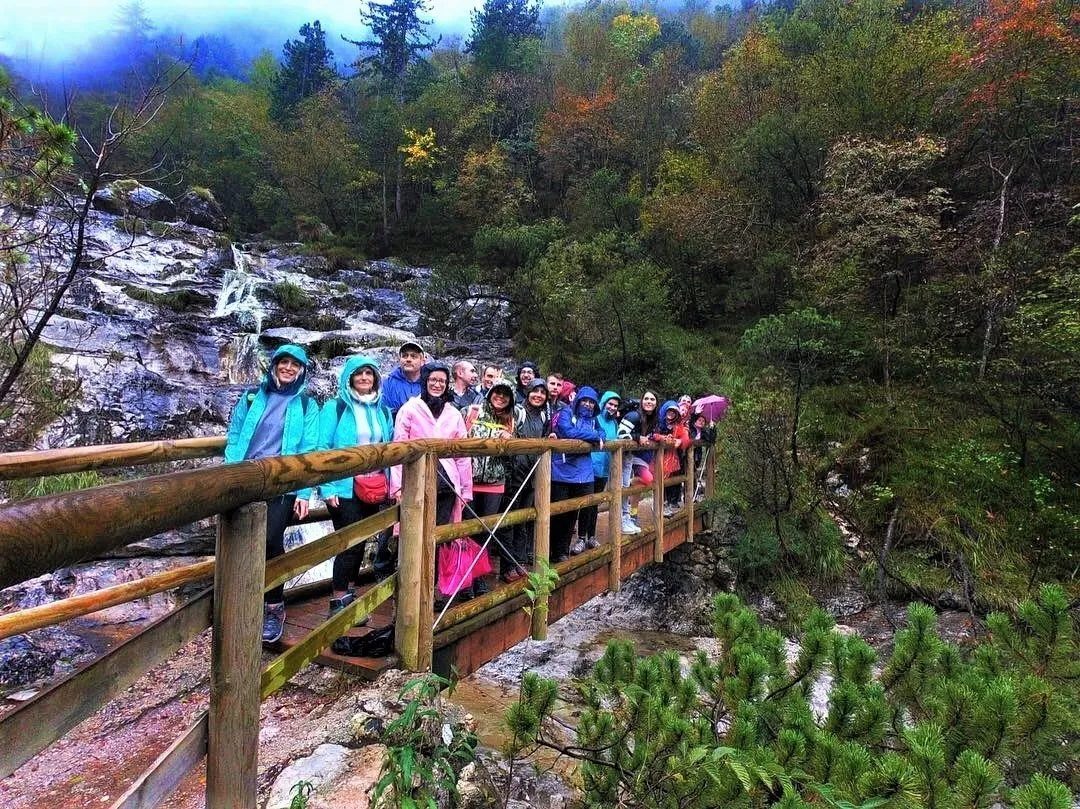
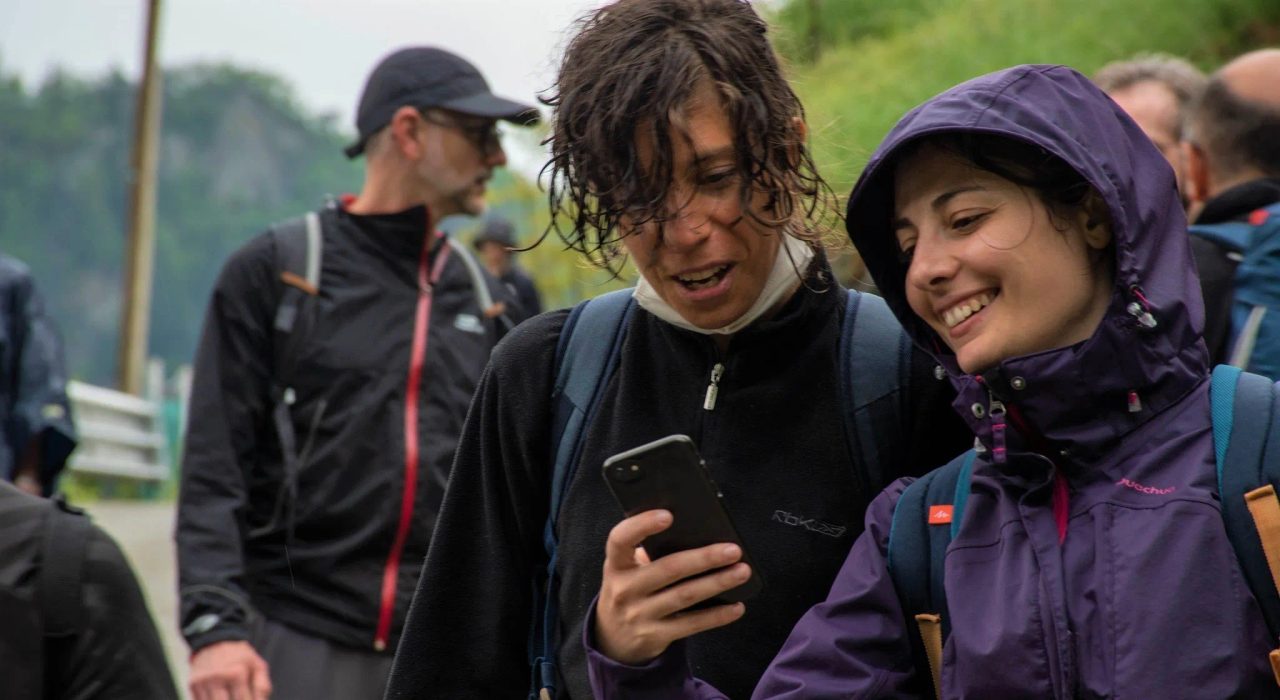
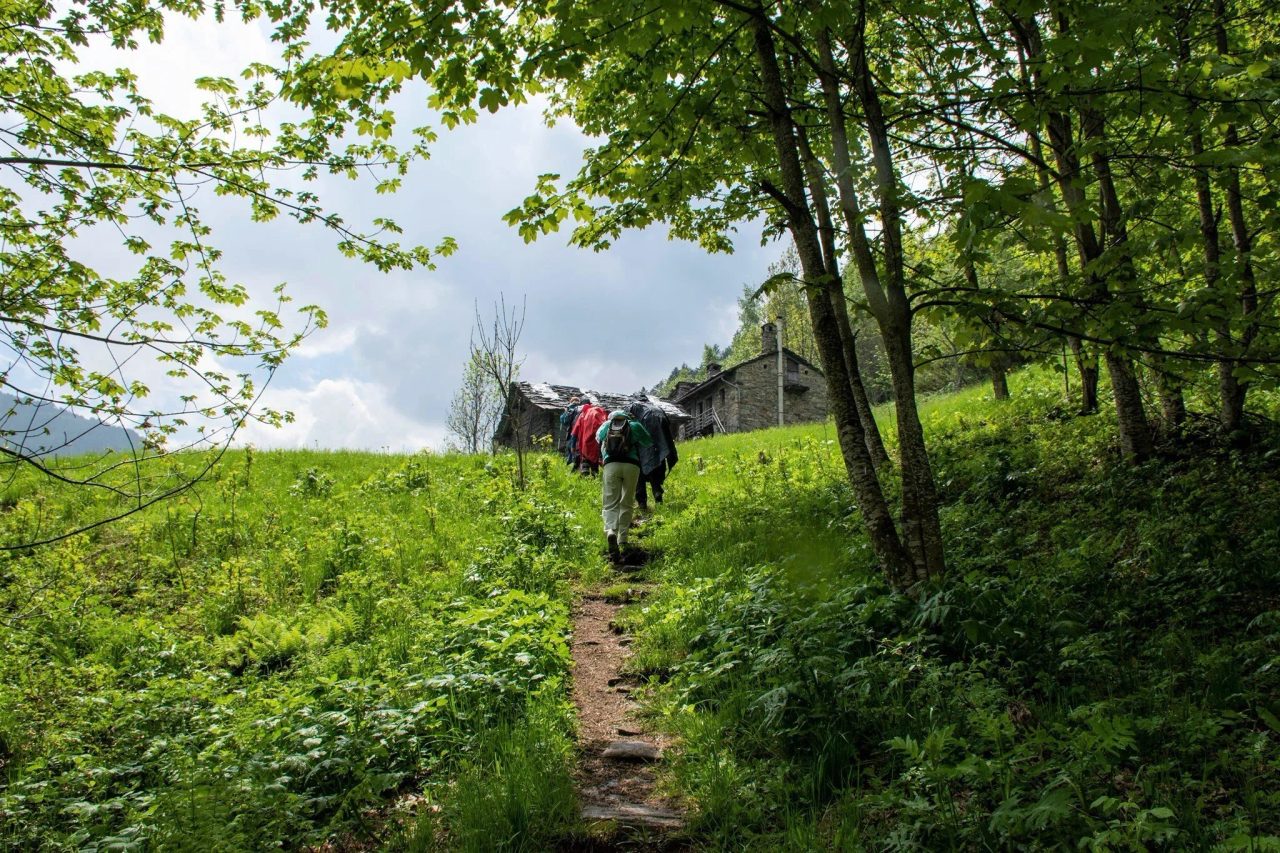
Hike Meeters at Ponte Nel Cielo (Sondrio)
(@Stefano Pantaleo)
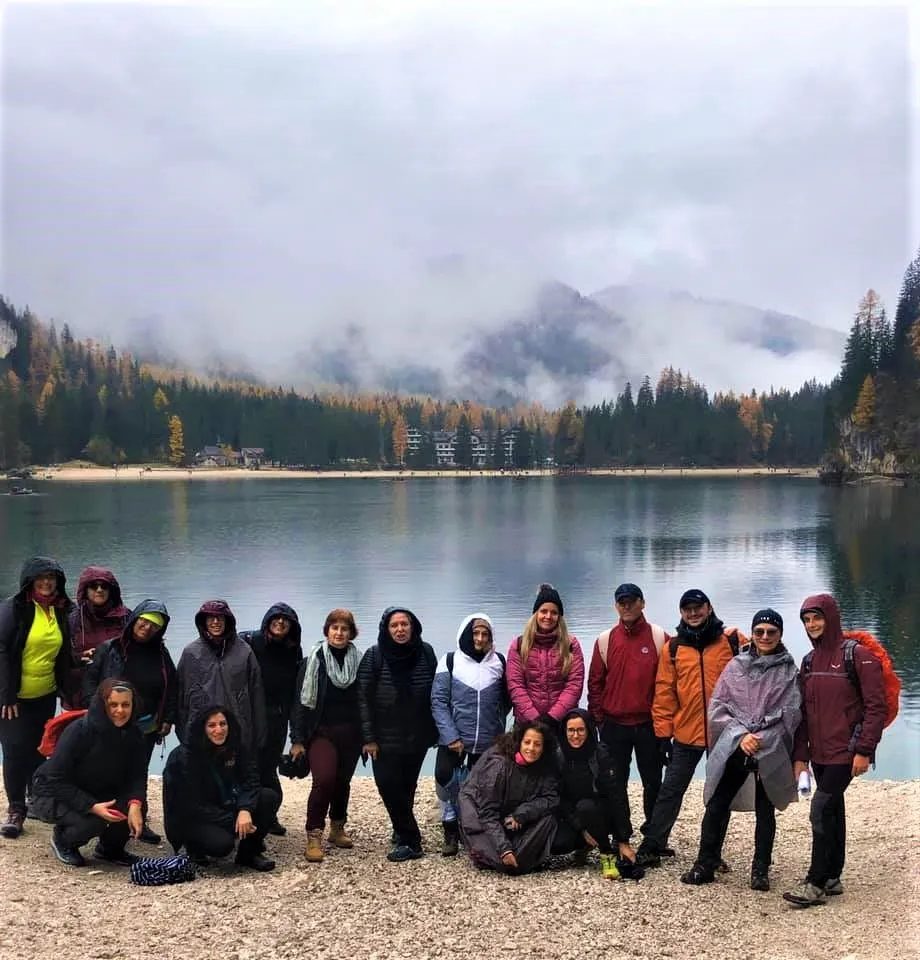
Meeters exploring Lake Braies (South Tyrol)
(@Paula di Grigoli)
Meeters along the Ponale Trail (Trentino-Alto Adige)
(@Velma Krajisnik)