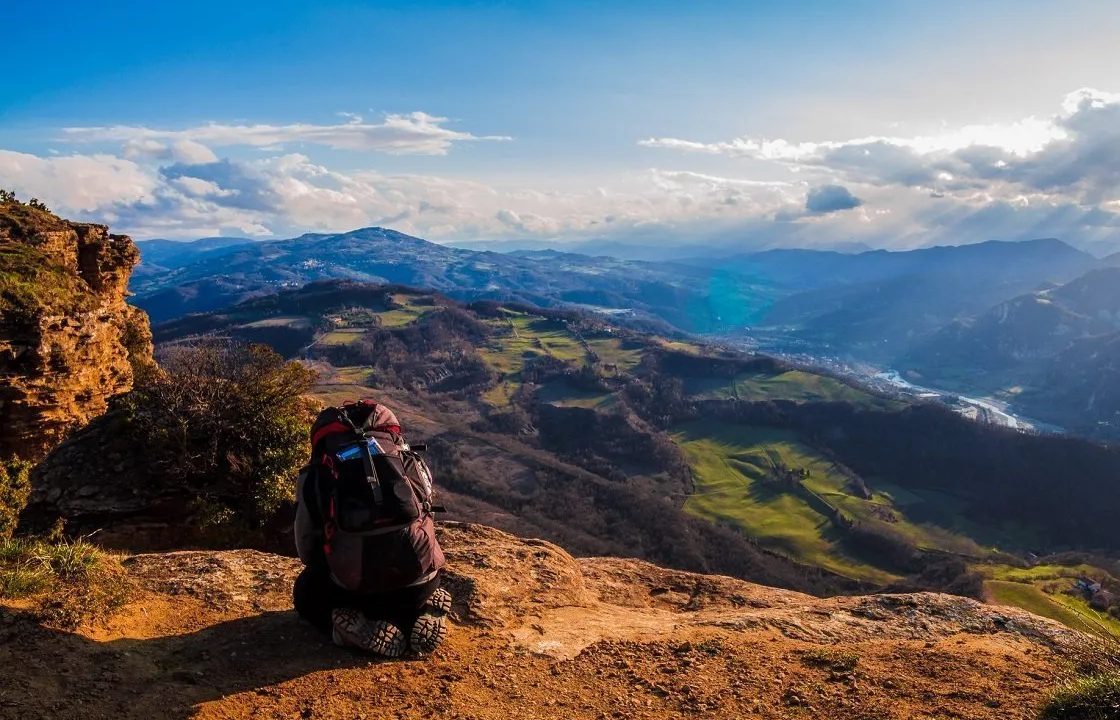
Bologna and Florence, two beautiful cities that have made history for their magnificence and their role in the history of the Italian city-states and later as centers of study, culture, and beauty. There is a woodland trail, walkable on foot, capable of connecting the two metropolitan cities and giving such great emotions as to fill the eyes with wonder and the heart with feelings: the Way of the Gods.
Origins, Stages and Duration of the Route from Bologna to Florence
This hiking route crossing the Apennines is about 130 km long and owes its name to the toponyms of some mountains along the way. The path retraces an ancient historic route used since Roman times to connect the city of Felsina (the Latin name for the Etruscan city of Bologna) with Fiesole (one of the most exclusive suburbs of Florence) and is largely wooded and pleasant to walk especially in spring, with longer days, mild climate, and limited rain risk. A beautiful natural trail walkable both by mountain bike and on foot, alone or with friends, to share your emotions along the journey.
The Way of the Gods is the starting point for those who want to challenge themselves and embark on a new adventure while comfortably staying in the Bel Paese (Italy). Generally, it takes from 4 to 6 days (including overnight stays) to reach the much-anticipated finish line by completing the 16 stages planned along the route (counting both the starting and ending points).
Considering that this adventure involves crossing the Apennines proper, some elevation changes are expected, however the maximum altitude is 1190 meters above sea level and corresponds to the summit of Monte Poggiaccio. The wooded areas are occasionally interrupted by paved stretches in the plains or near larger towns. The signage helps to reach the stages without losing the correct path, respecting the local flora and fauna of the territory crossed each time.
Given the duration, it is advisable to undertake the Way of the Gods with a fitness level capable of supporting long walks, even of 30 km per day which corresponds to about 9 hours of walking at a steady pace. In any case, the route can be divided into days depending on experience level.
What to See Along the Way
During this amazing experience, besides making new friends and tasting various dishes from the local Italian cuisines you can visit places from another era rich in history and meaning and discover various points of interest symbolizing local folklore. The starting and ending points first of all, Bologna and Florence, are the cradle of culture and the Italian Renaissance: the two iconic towers of Bologna with the magical Piazza Maggiore praised by Lucio Dalla, or the beautiful white marbles of Florence with its Palazzo Vecchio, as well as the David, so grand and powerful symbolizing the supremacy of intelligence over strength. But also many small villages with an ancient flavor, evoking a simple and pure yet fascinating lifestyle, among the countryside and long stretches of fields and woods.
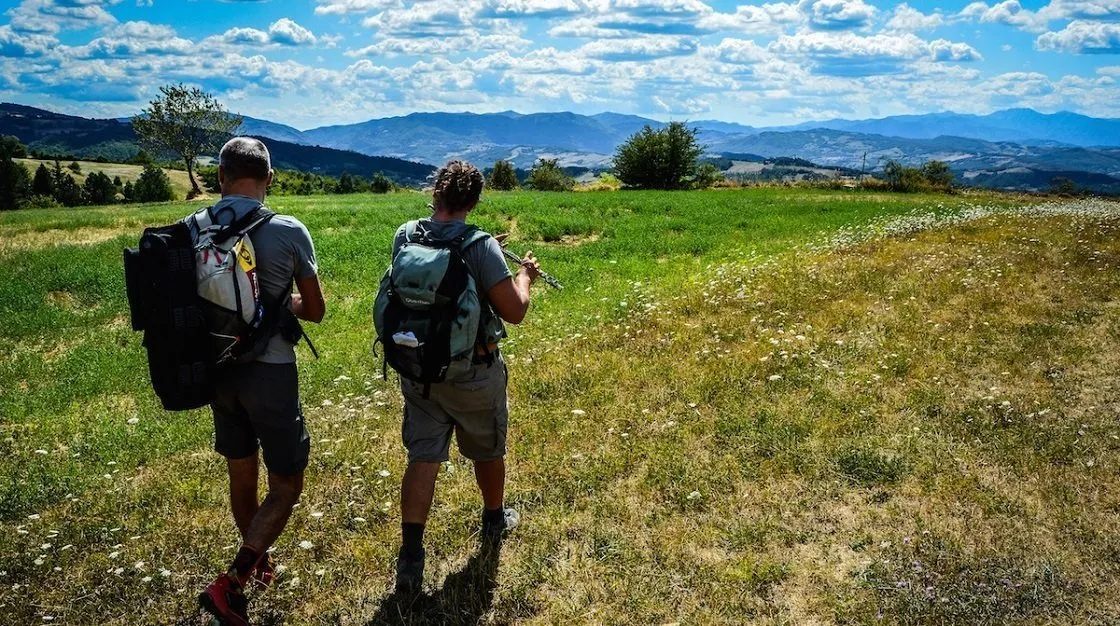
The first 20 km are easy and fun, perfect for warming up muscles, along simple dirt roads through municipal parks. At the beginning of the route, you will have the pleasure of passing under the longest portico in the world, measuring a full 3,796 meters and consisting of 666 arches, to stop at the Sanctuary of the Blessed Virgin of San Luca, in the heart of Bologna. Walking along the Reno river, you will reach the San Gherardo Nature Oasis: there are several oases and nature reserves along the route, all waiting to be discovered. Among the most beautiful is the Monte Adone Wildlife Oasis, where you can admire various bird species, be amazed by the area's wild flora, and enjoy breathtaking panoramas. Traveling this stretch you can watch the landscape change before your eyes, and as you proceed, see conifers give way to olive trees.
Along the Madonna dei Fornelli trail, some remains of the ancient Flaminia Militare road overlap with a beautiful Roman-era route dated 187 B.C. A must-see for history lovers and its artifacts is the interior of the Piana degli Ossi, where remains of a 2nd-century B.C. furnace are present. Another place of interest is the German cemetery at Passo della Futa, where over 30,000 German soldiers who fell during the Allied offensive on the Gothic Line are buried.
Arriving at Sant’Agata del Mugello you can admire the Pievechurch