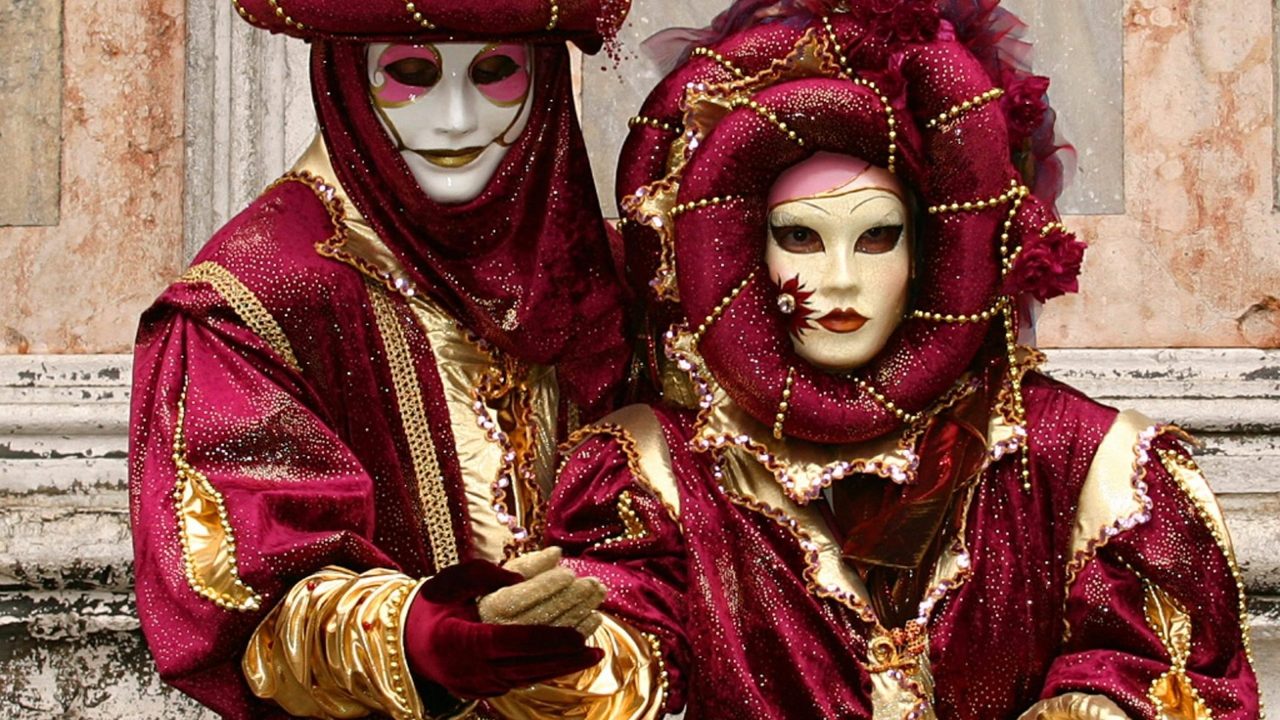
Ah, Venice! A city that seems to float on water, but when Carnival arrives, so do the colorful masks. Venice transforms into an enchanted stage, where every corner reveals a new spectacle. At the heart of this magic are the Venetian Carnival masks, which with their charm and mystery capture the imagination of anyone lucky enough to encounter them.
The masks of Venice Carnival are not mere decorative objects; they are true works of art, born from a centuries-old tradition that has evolved over time. Each mask tells a story, every detail a secret whispered among the alleys and squares of La Serenissima.
A Journey Through History: The Origins of Venetian Carnival Masks
To fully understand the allure of Venetian Carnival masks, we must take a step back in time. It is said that the custom of wearing masks in Venice has ancient origins, linked to pagan rites celebrating the transition from winter to spring. Over the centuries, this tradition merged with Christian Carnival celebrations, becoming an opportunity for the Venetian people to escape everyday reality and immerse themselves in a world of anonymity and freedom.
The Mask as a Symbol of Freedom and Equality
During Carnival, social distinctions fade, roles blur, and everyone can be whoever they want behind the anonymity of a mask. This is the true spirit of Venetian Carnival masks: an invitation to explore new identities, to play with imagination, and to experience freedom without judgment. In those days, a fisherman can become a nobleman, and a nobleman can mingle with the crowd, all united by the magic of Carnival.
Types of Masks and Their Hidden Meanings
Venetian Carnival masks come in various shapes and styles, each with its own meaning and history. The Moretta, an oval black velvet mask worn by women, symbolized discretion and mystery. Then there is the famous Colombina, a half-mask decorated with feathers and jewels, embodying seduction and vivacity.
The Art of Mask-Making: Techniques and Materials
Creating Venetian Carnival masks is an art that requires patience, skill, and deep knowledge of materials. Traditionally, masks were made of papier-mâché, a technique that produces forms that are light yet durable. Today, official events and masked balls, exploring the city on foot, and of course, wearing a mask to fully immerse oneself in the spirit of the celebration.
Have you ever been to the Venice Carnival or do you own a Venetian mask? Share your experience or curiosity in the comments below. We look forward to reading your stories and answering your questions about the fascinating Venetian Carnival masks!