Andalusia: a name that evokes deep emotions and magical images. A land halfway between Africa and Europe, overlooking the Strait of Gibraltar and washed by the Atlantic Ocean and the Mediterranean Sea. A region made up of vast landscapes, wild coasts, and colorful towns where tradition perfectly blends with modernity. Homeland of flamenco, Picasso, and Velázquez, Andalusia has undergone many conquests but has always been able to make the best of them all, reworking its history into a layered and irresistible culture, rich in influences and inspiration.
For centuries, Andalusia has exerted its charm on travelers, attracting them like sirens to sailors. If you too have been enchanted by its name and the notes of flamenco, read this article to discover what to do in Andalusia and convince yourself that it is finally time to set off!
Things to Do in Seville
Seville is the capital of Andalusia and the symbolic city of this land. It is impossible not to be fascinated by its streets, the architecture of its buildings, and the atmosphere you breathe.
Everywhere, in fact, you can find traces of Arab rule, side by side with those of the Christian “reconquest.” Your journey through the most coveted of Spanish regions can even have this city as your only stop. You will indeed be spoiled for choice among things to do!
If you are looking for a particular time to undertake this adventure, we recommend the Easter period. Seville is famous for the processions that take place during the resurrection of Christ, but also for the Feria de Abril.
This spring festival begins after Easter and lasts 10 days, during which the city lights up with lanterns, parades, traditional costumes, and above all flamenco.
Seville is indeed the capital of flamenco, and whenever you visit, you cannot leave without dedicating at least one evening to this art form, reproduced worldwide but true and powerful especially at home.
Plaza de España and the Historic Center
Seville’s historic center is a collection of unique monuments worldwide, deserving time to explore them thoroughly, perhaps with a local guide.
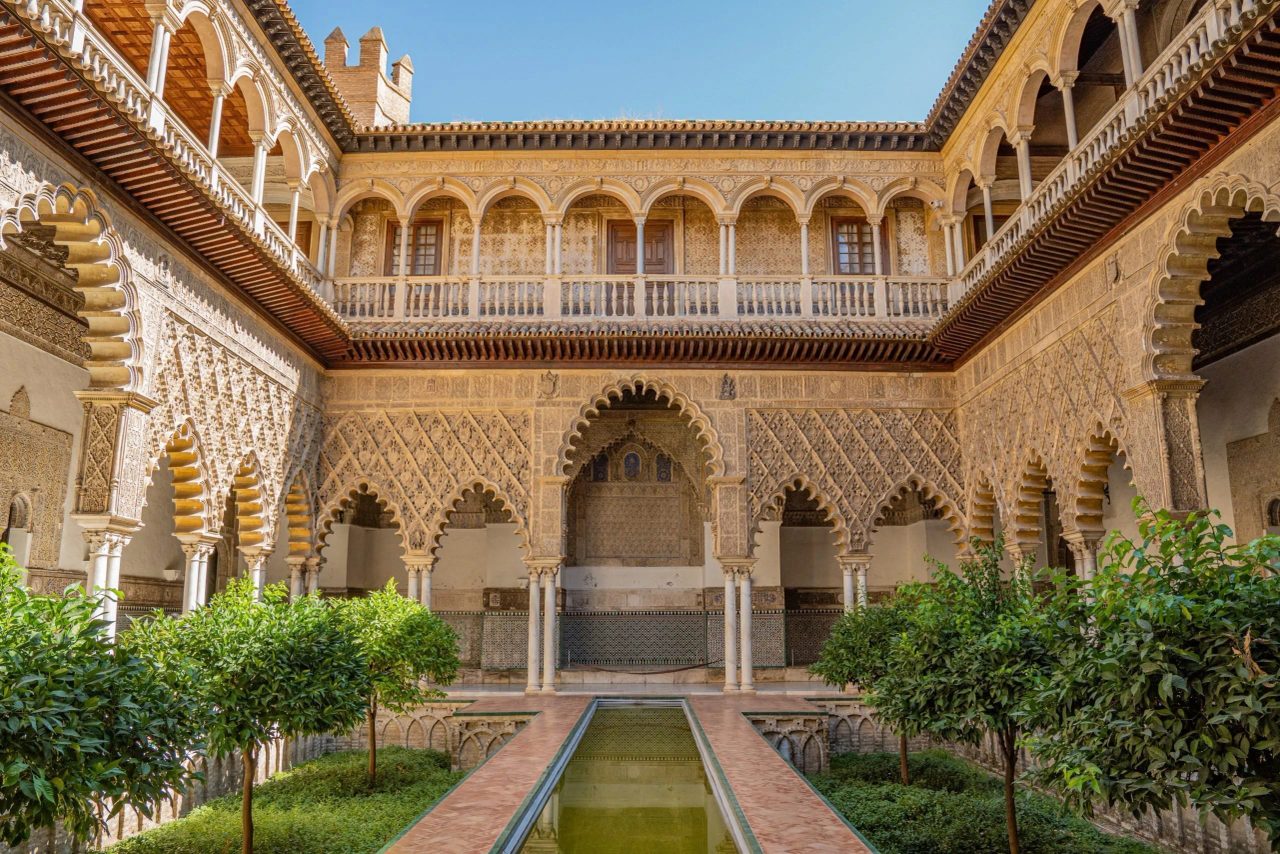
Among all Seville’s buildings, the most appreciated is the Real Alcázar, or simply Alcazar, the Andalusian residence of the King of Spain. It is open daily for visits both inside, among the many sumptuous rooms, and outside among its stunning gardens.
Also the Seville Cathedral is among the must-see sights. It is an extraordinary cultural heritage site, being the third-largest cathedral in the world and recognized as a UNESCO World Heritage Site. Inside this majestic Gothic building you will find many unique works of art, but above all the tomb of Christopher Columbus.
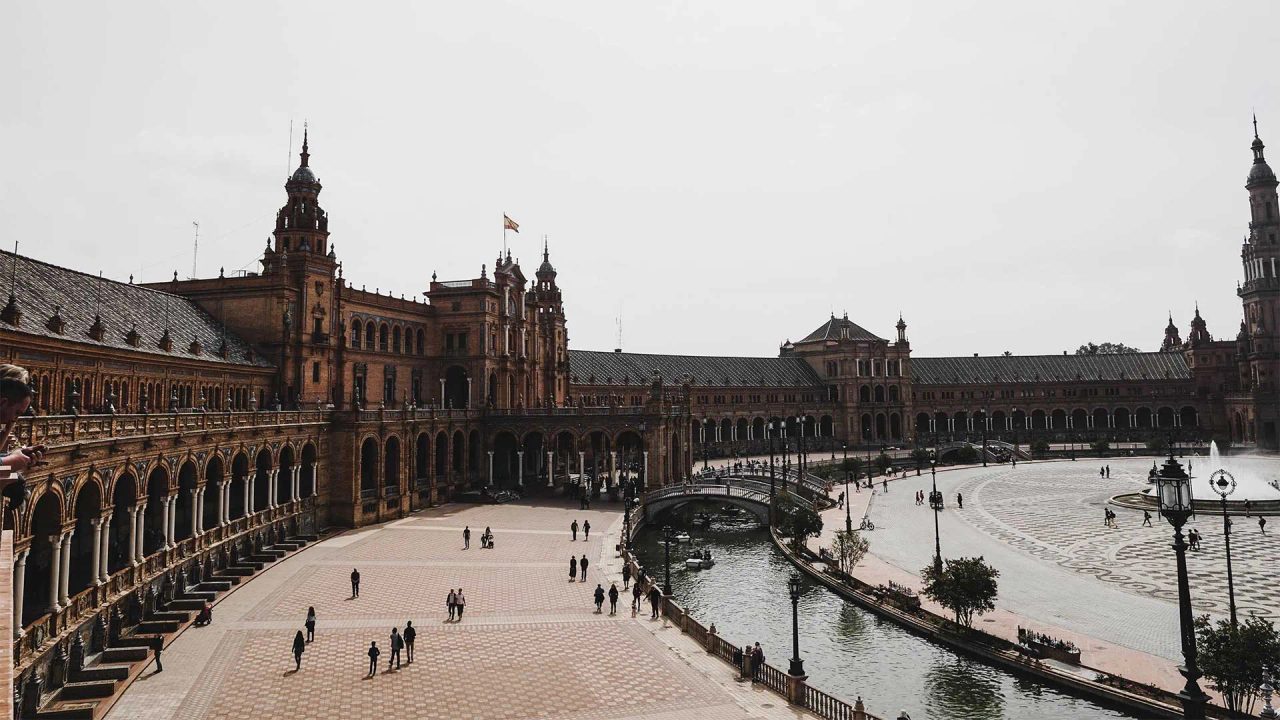
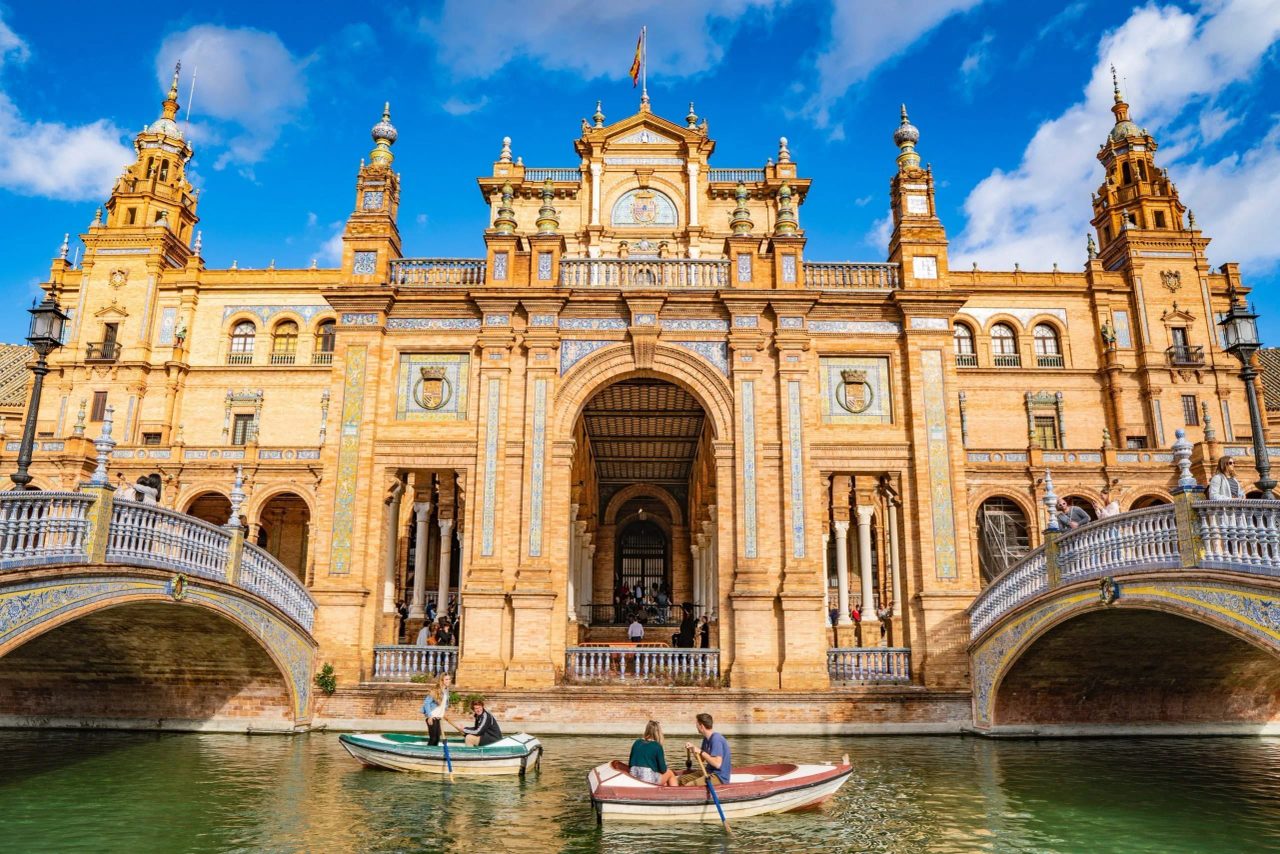
Not to be missed are also the centrally located Plaza de Toros and the Barrio de Santa Cruz, the old Jewish quarter, very picturesque. The Parque Maria Luisa is a wonderful English-style garden that preserves numerous plant varieties and the incredible Plaza de España.
This square captivates with its perfect symmetry, two tall Renaissance and Baroque-style towers, a canal, and bridges crossing it. Plaza de España is also known for its series of benches decorated with colorful ceramicsrepresenting the 48 Spanish provinces.
Finally, don’t forget to visit the Museum of Fine Arts of Seville, which houses the most beautiful and characteristic works of Andalusian tradition.
[activecampaign form=22 css=1]
Cordoba
After the long stop in Seville, the second thing to do in Andalusia is to visit Cordoba, the ancient capital of the Arab caliphate.
Cordoba is also a city that encompasses many influences, and it is said that it has three souls, Christian, Muslim, and Jewish. The latter has left important traces, such as in the Juderia, the Jewish quarter where you can lose yourself in long and relaxing walks.
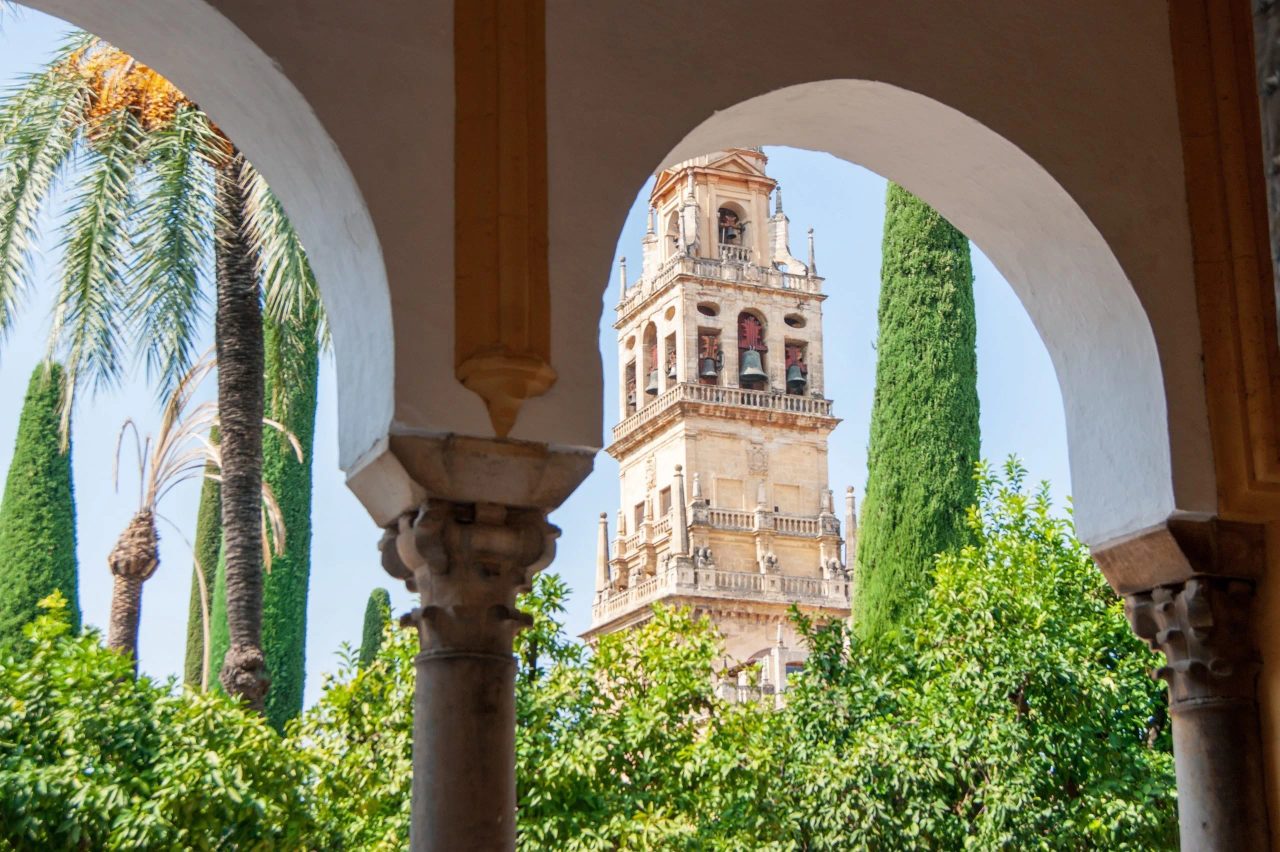
But it is above all the Arab domination that has most influenced the city. Among the most visited monuments is the Mezquita, built in 785 but progressively expanded for almost 300 years. After the reconquest, the structure was adapted to Christian needs, increasing its already extraordinary charm. Moorish art meets Gothic and Renaissance styles here, for a unique result worldwide.
Among Cordoba’s greatest attractions stands the Torre de la Calahorra. The fortress today offers a gateway to Italy and abroad for travel and making friends!