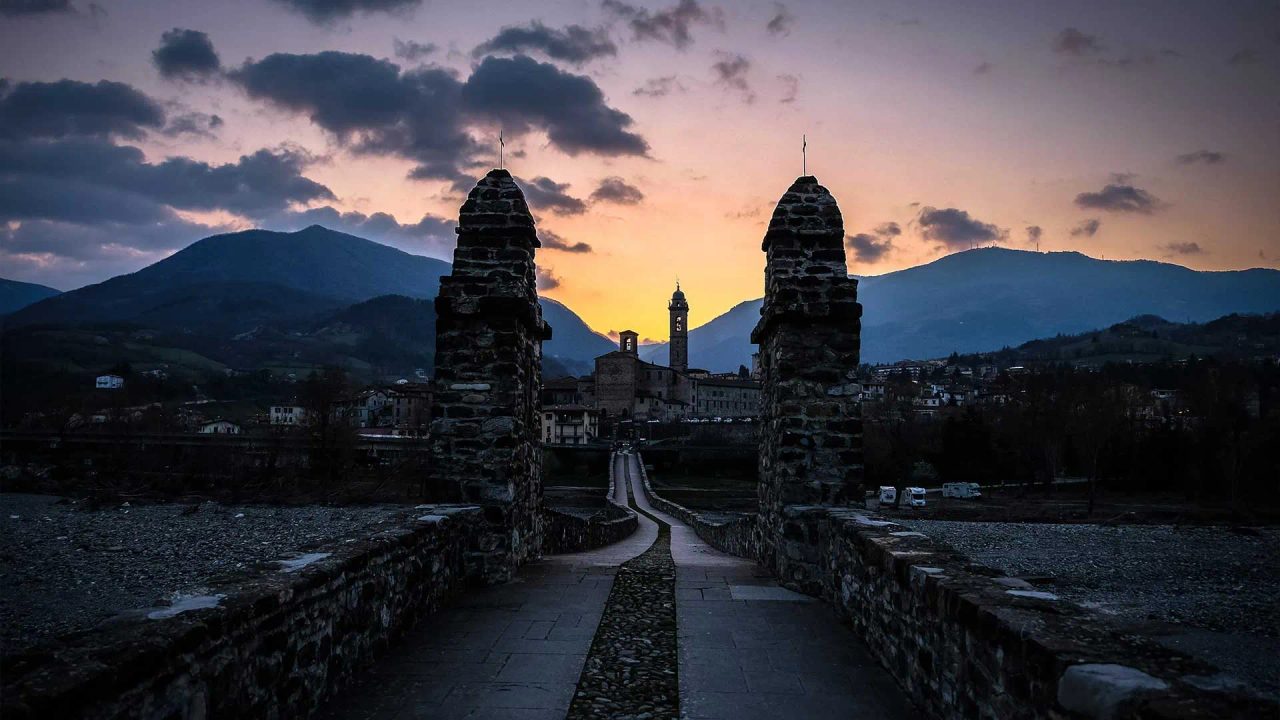
In the province of Piacenza, in the heart of Emilia Romagna, lies what was voted Italy’s most beautiful village in 2019: Bobbio. The town truly embodies the quintessential medieval village. It sits on the banks of the Trebbia River, boasts an important abbey and one of the most prestigious libraries of Christendom, and the entire town is steeped in stories of ghosts and demons. Although small (with only 3,300 inhabitants), the list of things to do in Bobbio is long and includes monuments of extraordinary artistic, historical, and cultural interest. Let’s discover together the beautiful tour in this corner of the Piacenza area!
The Hunchback Bridge
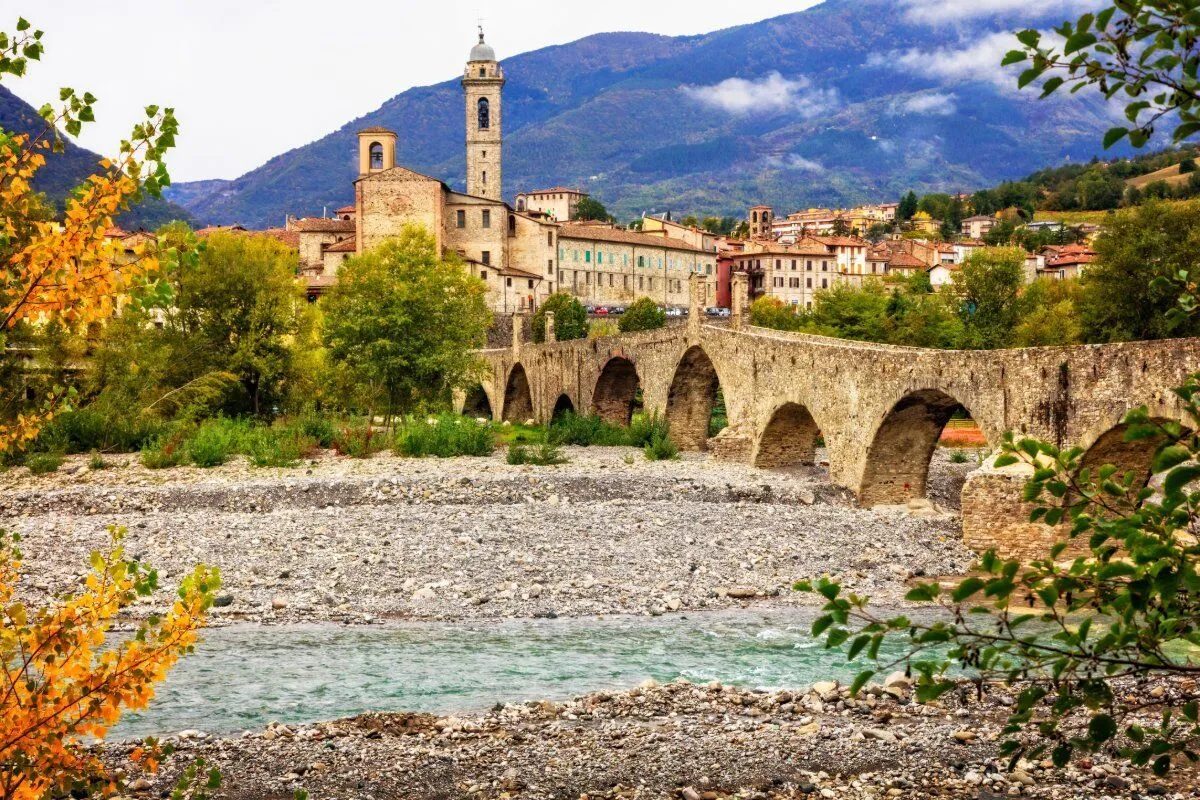
The fame of the Hunchback Bridge (also called Old Bridge or Devil’s Bridge) precedes that of the village itself. It’s the first thing visitors see when arriving in Bobbio and even before, as it has become the symbol of the town.
Each name of the bridge has its reason. It’s called the Hunchback Bridge because it doesn’t run flat but has irregularities,humps indeed. It’s called the Old Bridge because it hasn’t been possible to date it precisely,though it’s known for certain it was built in Roman times, but exactly when is unknown.
Behind its third name, Devil’s Bridge, lie several legends, but one in particular is dear to the town. It is said that San Colombano wanted to bring the divine word to Bobbio.To free the town from the isolation imposed by its location across the river, he decided to build a bridge. To finish the work as quickly as possible, he made a pact with the Devil.
The Devil accepted the job, on the condition that he would claim the soul of the first living being to cross the bridge. The work was completed in one night, and the irregularity of its arches is attributed to the different heights of the devils who worked on it.
At sunrise, however, San Colombano had a dog cross the bridge,thus outwitting the Devil!
[activecampaign form=22 css=1]
The Abbey of San Colombano
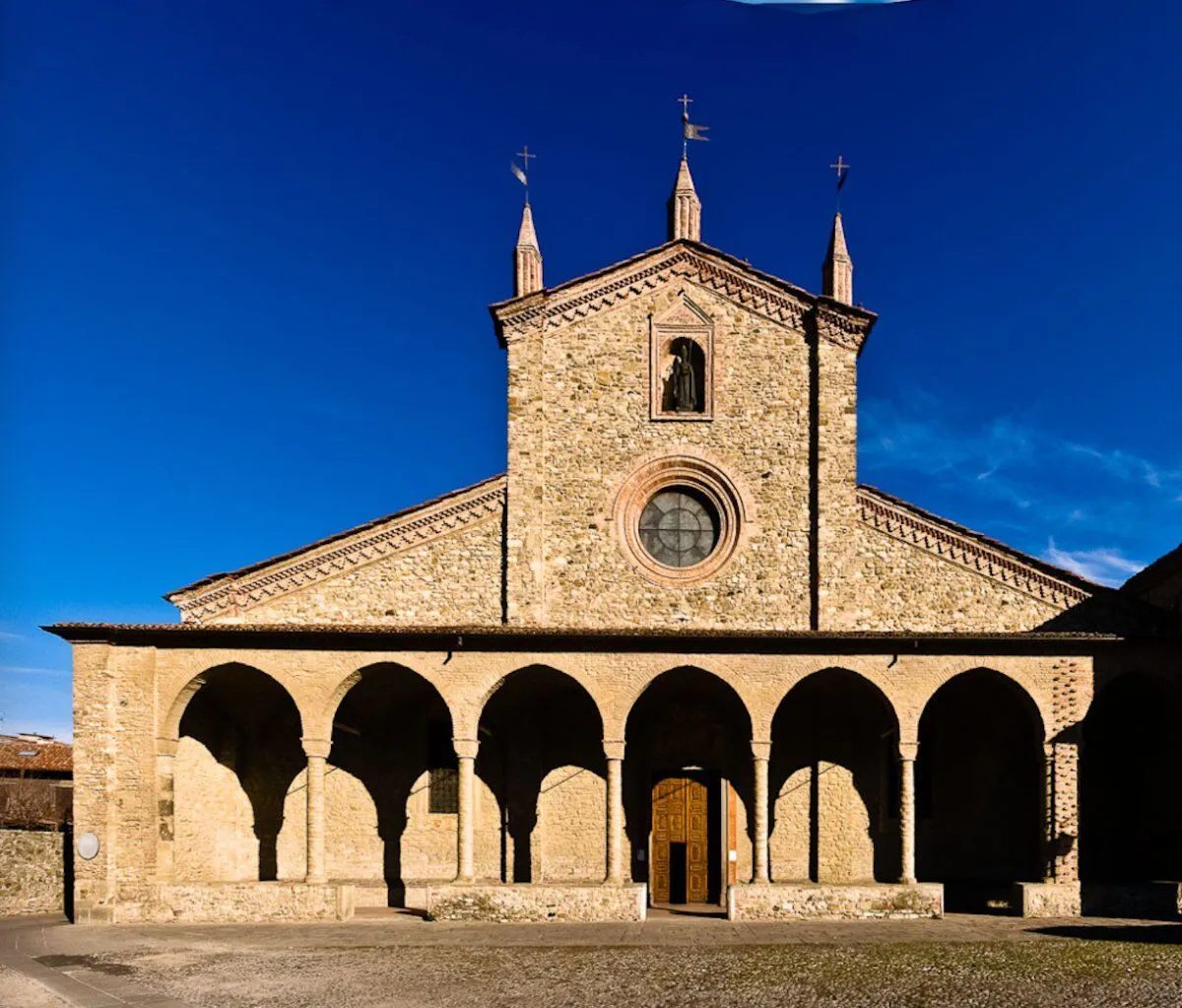
Many other city works are linked to San Colombano, the most important being undoubtedly the Abbey that bears his name and is closely tied to the personal story of the saint from Ireland in 612. San Colombano found himself at the court of the Lombard king, whom he converted to the Catholic faith. The king then wanted the saint to convert his subjects as well and gifted him a ruined church in the territory of Bobbio.
Within a few years, San Colombano and the first monks who joined him built the Abbey and began working on its library.This soon became one of the most important cultural centers in Europe, housing over 700 manuscripts,including texts by Cicero, Seneca, and Plautus.
The library as it once appeared no longer exists; many manuscripts are now housed elsewhere. We have organized in this splendid village a unique opportunity to make new friends and discover Italy.