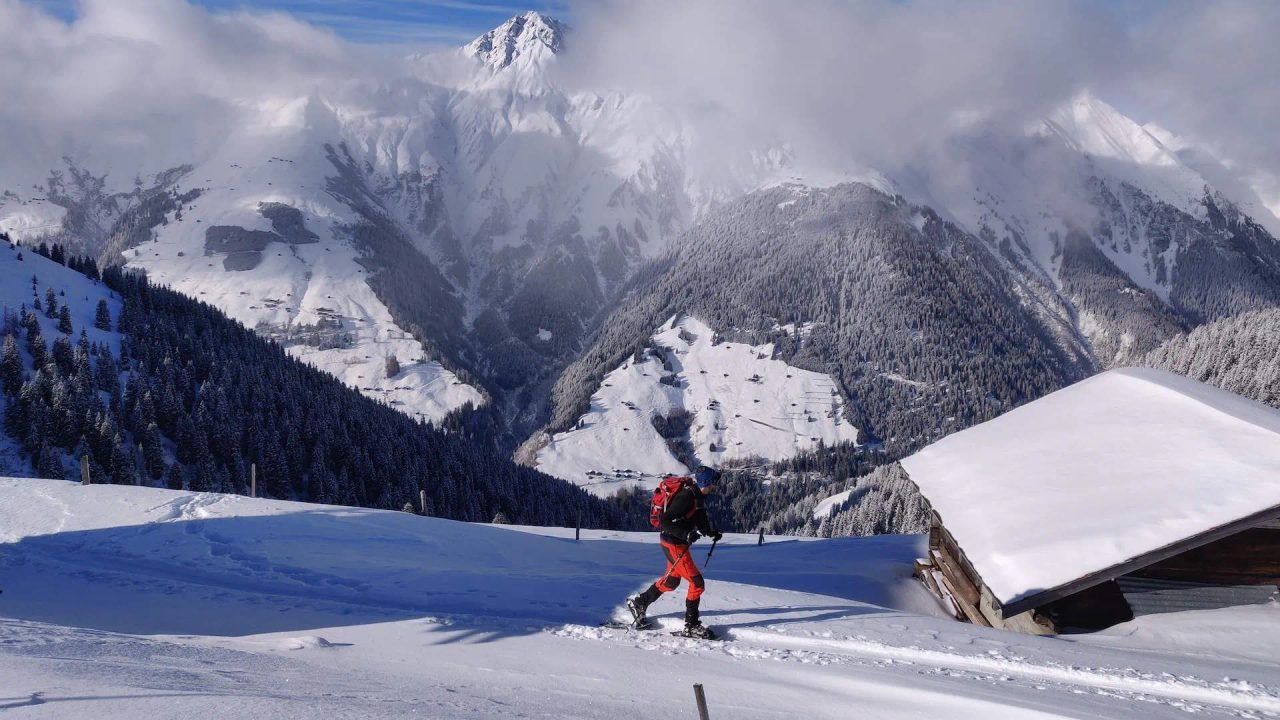
When we talk about activities to do during the winter season, sooner or later the term snowshoes always comes up. Snowshoes are an incredibly popular alternative to skiing and are an activity that allows a person to enjoy fresh snow in a particularly satisfying way. However, before embarking on a snowshoeing route, it’s important to know that clothing should not be underestimated!
When it comes to snowshoeing clothing, you need to bring the right garments to avoid becoming weighed down.
Walking with snowshoes is an activity we basically recommend everyone try: hikes, trekking, and even a simple walk take on a different flavor when you strap snowshoes to your boots. The snowy mountain when experienced with the right gear, is also a safe place to go, weather permitting.
At Meeters, we know the world of snowshoeing well: many of the events we organize include this kind of activity, and many people have succeeded in making new friends with snowshoes and snowshoes on their feet.
Let’s take a closer look at the best clothing to have when going snowshoeing.
What Are Snowshoes?
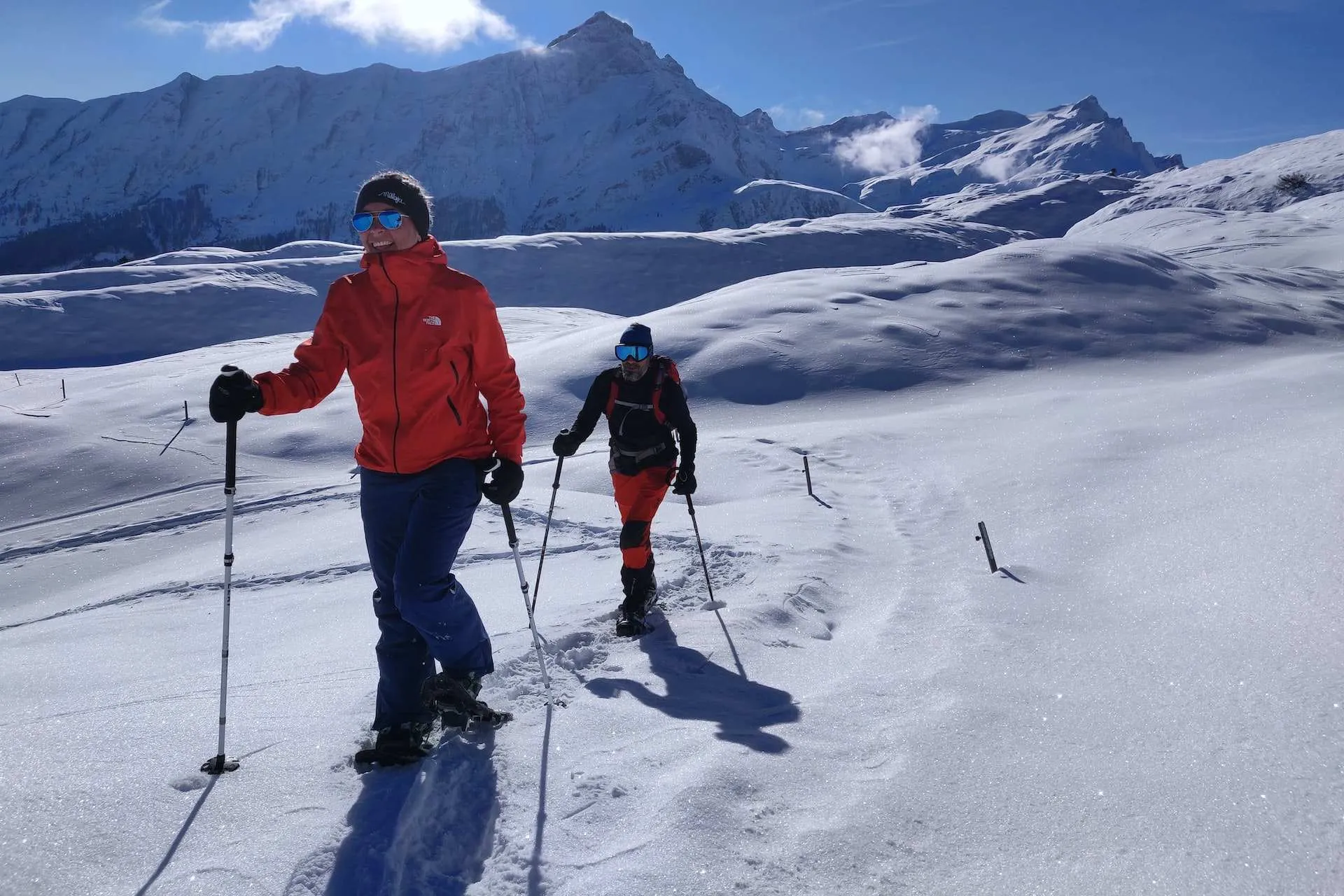
Let’s start with a brief technical premise: snowshoes, a fundamental accessory for many mountain and cold-weather winter hikes, are an alternative to skiing that has grown particularly popular over recent years.
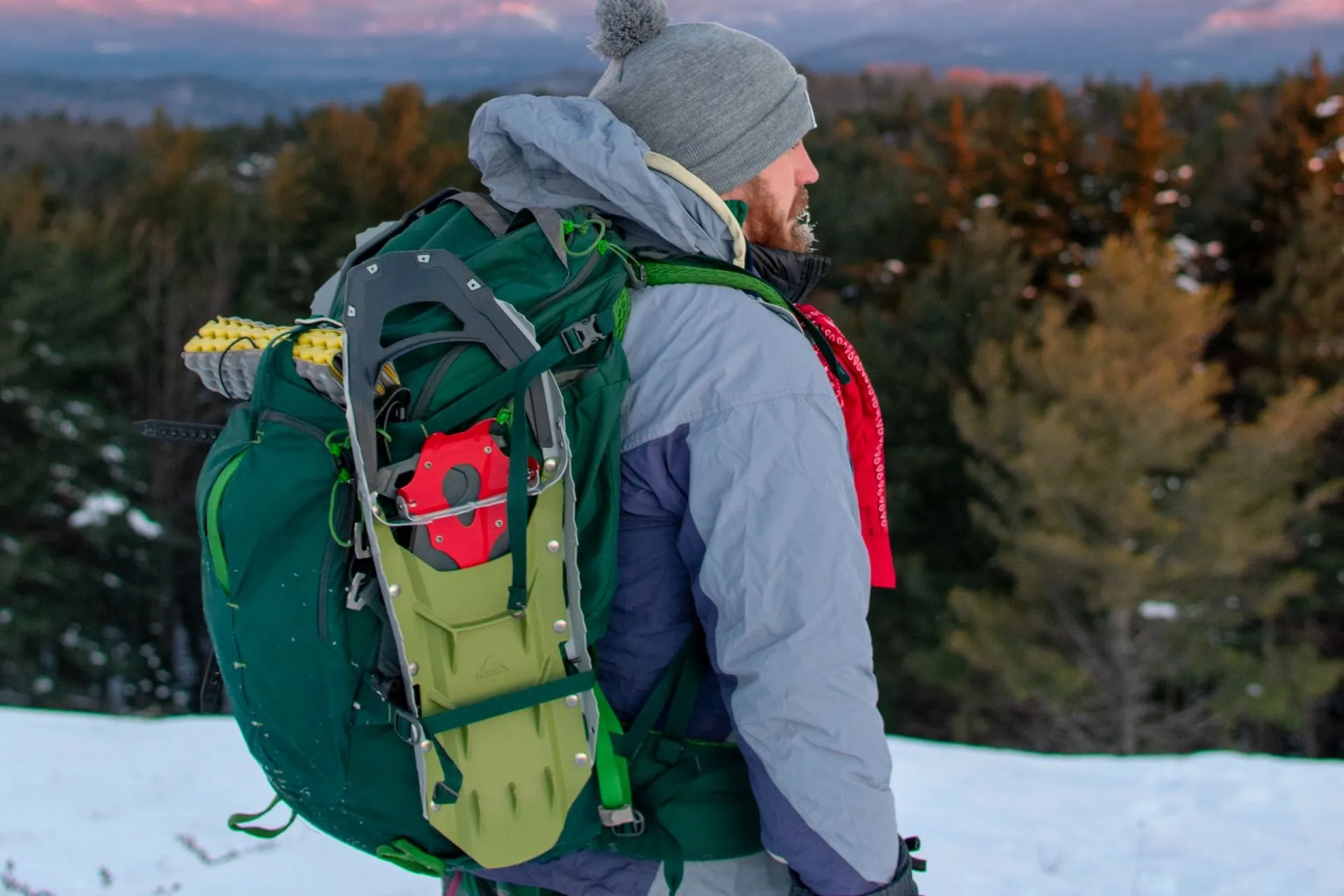
In practical terms, snowshoes are nothing more than rigid platforms, often made of plastic, about 40 to 50 centimeters long. Their purpose is very simple: they allow you to walk on fresh snow (but also on soft, compact, or packed snow) without particular problems.
[activecampaign form=22 css=1]
Snowshoes attach to boots via a special pivoting device; there are different types of bindings, but they don’t significantly change the overall experience. The essential part is the bottom of the snowshoe, filled with steel crampons on the sides and front. These crampons give the wearer excellent grip even in the most challenging situations, such as icy conditions.
What Is the Best Clothing for Snowshoeing?
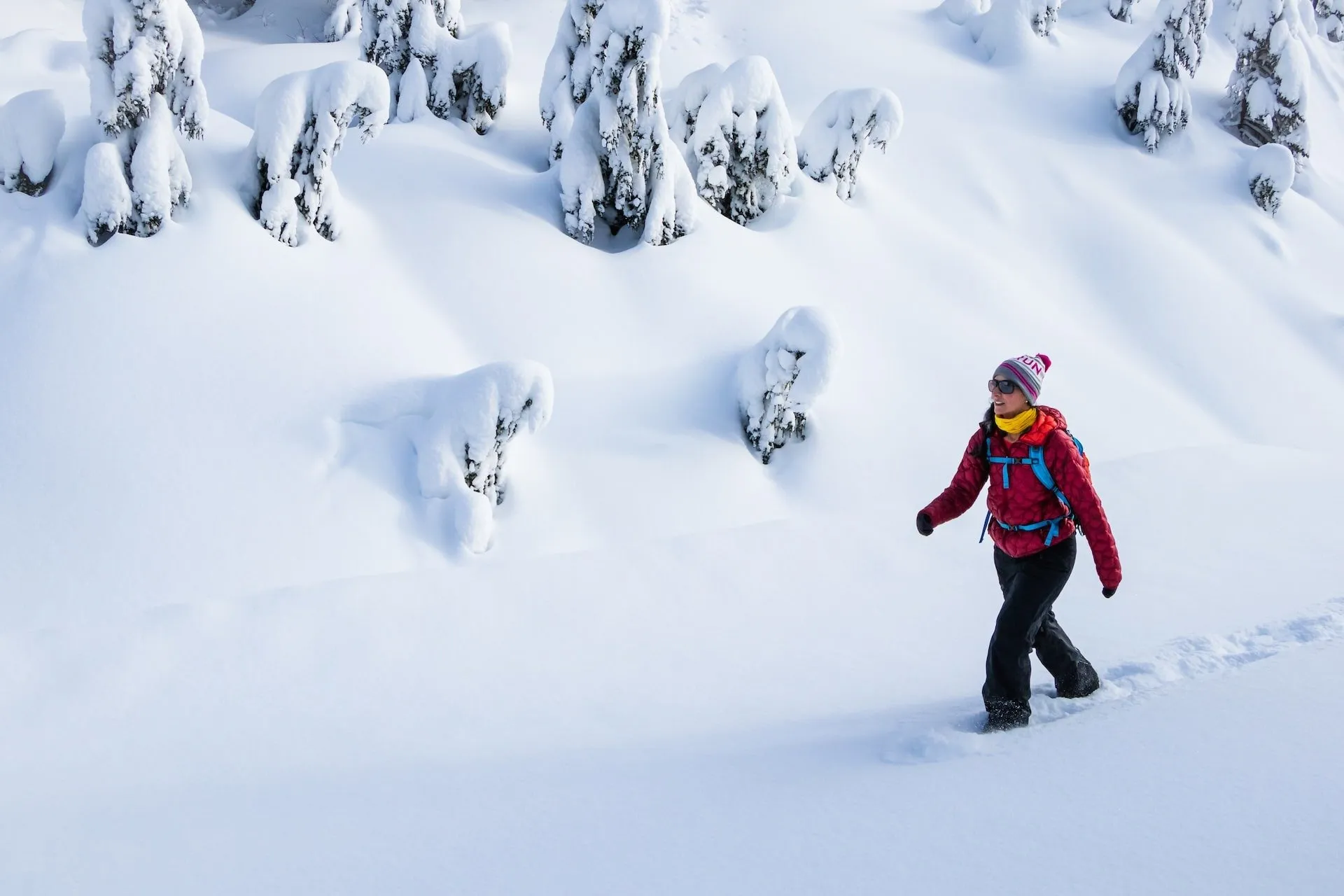
Now to the heart of the matter: what is the best clothing for snowshoeing? Snowshoeing is not very different from cross-country skiing and requires a considerable expenditure of energy from the body.
This is because the muscular effort to support the body with the added weight of snowshoes and snow involves quite intense fatigue, challenging both the muscle fibers and overall endurance.

On average, after ten minutes of snowshoeing, it’s quite normal to start sweating a bit, so to avoid unpleasant surprises, it’s better to prioritize practicality over heat retention. Wearing padded garments would only make movements more tiring, increasing the amount of sweat produced.
What Clothes to Wear
So what should you do in these cases?
The clothing can be divided as follows.
- Long PantsThe three most important features are breathability, wind resistance, and waterproofing. Avoid fabric pants or jeans; better options are tight ski pants or, generally, sports pants.
- Long-Sleeve Technical ShirtThe best choice here is to buy a long-sleeve shirt made of technical (synthetic) fabric. Cotton and organic materials tend to get very wet with sweat against the skin, causing cold after a short time.
- Fleece SweatshirtHere too, it’s best to choose products made with technical fabrics aimed at maximum breathability; if the fabric is also windproof, even better. The goal here is to retain heat while allowing sweat to evaporate.
- Protective ShellIt’s better to opt for waterproof, flexible shells, preferably made of technical materials. In this case, it’s good to look for names like Gore-Tex or Polartec to ensure maximum functionality and quality.
Best Equipment for Snowshoeing: What to Bring
Besides snowshoes, what items should you bring to fully enjoy the experience in the snow?
Telescopic poles are very important, useful for reducing the load on all joints rather than just the lower ones. Along with snowshoes, poles are the most important tools because they help reduce fatigue, thus extending the duration of the snowshoeing.
Waterproof gaiters are also very important: these are simply an extra layer for the lower body, necessary when walking on soft snow that might get inside the boots. If you don’t have boots, you can also use high hiking boots; the important thing is that they protect the ankle in some way. these are nothing more than an extra layer for the lower body, necessary when walking on soft snow that might seep inside the boots themselves. If boots are not available, you can also opt for a simple high hiking boot; the important thing is that it somehow protects the ankle.
sunscreen and sunglasses can be very useful. The sun reflects off the white snow cover, and this excess UV exposure can easily cause sunburn. Well-being Comes from Preparation
A backpack is also very important, waterproof as well. The type of backpack can vary depending on the duration and type of excursion. We recommend backpacks of 30 liters for day-long snowshoeing trips, while for multi-day trips, it’s better to go for 45 to
A waterproof backpack is also very important. The type of backpack can vary depending on the duration and type of the excursion. We recommend choosing 30-liter backpacks for day snowshoe hikes, while for multi-day snowshoe hikes, it's better to go for 45 liters or more. 50 avoid 60-liter backpacks because you risk overloading them, which would worsen the overall experience. Since health should always come first, even when you’re a few thousand meters high, it’s always good to bring a
first aid kit filled with medications that may be useful for your specific needs. Usually, snowshoeing guides carry generic kits with bandages, disinfectants, plasters, and so on, but each participant should bring what’s necessary for their specific conditions. Also essential is carrying a full set of medications that may be useful for your specific health issues. Usually, the snowshoe hike guides carry generic kits with bandages, disinfectants, plasters, and so on, but each participant should bring what they need for their more specific conditions.