
The city of Como rises among low moraine hills on the lake of the same name that has made it famous worldwide. Appreciated as a charming holiday destination since Pliny the Younger in the 1st century AD, Como became in the 18th century the preferred destination of writers and poets who found on its shores the much sought-after peace of mind. Many years have passed since then, but Como has never ceased to exert all its charm, attracting thousands of people every year who wish to lose themselves among its streets and waters. So let's see what to do in Como in two days!
A Walk Through Como’s Historic Center
The historic center of Como is small and can be comfortably visited in half a day, but that doesn’t mean its monuments are insignificant. Among the narrow streets of the old town stand palaces, churches, and houses with magnificent and richly detailed facades. Here’s what to see in Como, among the most important buildings and monuments.
Cathedral of Santa Maria Assunta
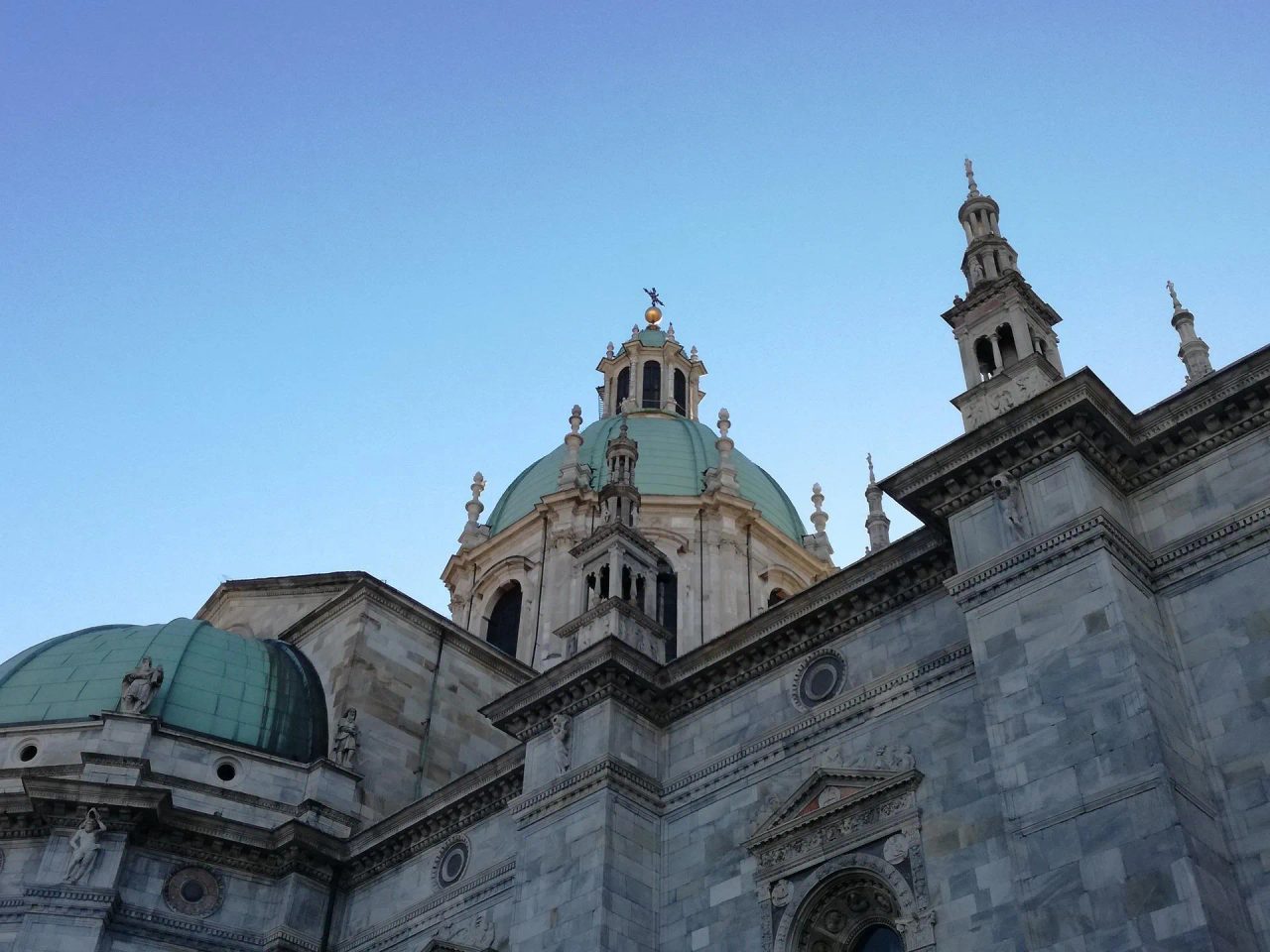
The Cathedral of Santa Maria Assunta, also simply known as the Como Cathedral, stands out with its massive size among the narrow streets that seem to want to engulf it. It is one of the most beautiful religious buildings in northern Italy, thanks to the blend of styles, from Gothic to Renaissance, that coexist in perfect harmony.
On the facade, among the Gothic spires and pinnacles, stand shrines dedicated to two of Como’s most illustrious citizens, Pliny the Younger and Pliny the Elder. .
Palazzo del Broletto
Attached to the cathedral is the Palazzo del Broletto, an ancient town hall built around 1200 by order of the podestà Bonardo da Cadazzo. The proximity between the town hall and the cathedral is not accidental but indicated the continuity between temporal and spiritual power.
The palace’s facade is characterized by bands of white, red, and gray marble, and a tall tower, built using rustication technique. Over the centuries, the Broletto has undergone several structural modifications and with them its function has changed, becoming for example a theater in the 18th century. Today for traveling and meeting new people in Italy and abroad!