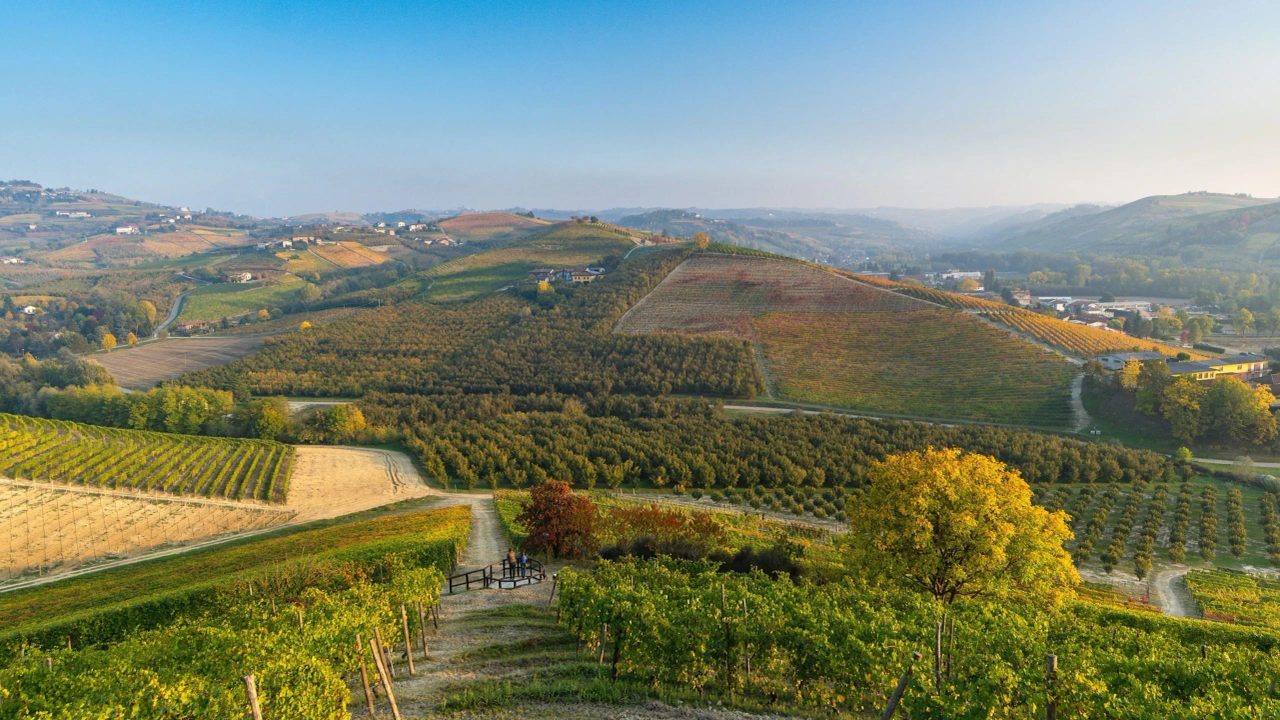
Visiting the Langhe means exploring a fascinating hilly region stretching between the provinces of Cuneo and Asti, at the foot of the Ligurian Alps.
You can see these winding “tongues” of land extending to the border with Monferrato. They are easily accessible from Turin, Milan, and also from Liguria.
Due to their characteristics, they lend themselves to special itineraries that combine a passion for trekking and slow walks with food and wine tasting, amidst incredible landscapes and historical heritage treasured throughout Italy.
Truffles and Famous Wines make them an important center for food and wine production in Piedmont. Alongside Barolo and Alba’s White Truffle, in the Langhe you can taste the robiola cheeses of Roccaverano and Murazzano, and the Tonda Gentile, a prized variety of hazelnut.

But it doesn’t end there: the Langhe are rich in history. They preserve an intact culture and historical memory still fundamental today for the entire region and for Italy itself.
It’s not just medieval heritage marking many of the small villages. The area was also an important stage in 20th-century Italian history and great writers like Cesare Pavese, born right here, and Beppe Fenoglio set some of their works here.
Theautumn is the best season to visit. At this time of year, the landscape becomes even more picturesque thanks to a spectacular foliage that paints the hills with shifting colors ranging from shades of green to the yellows and reds typical of the season.
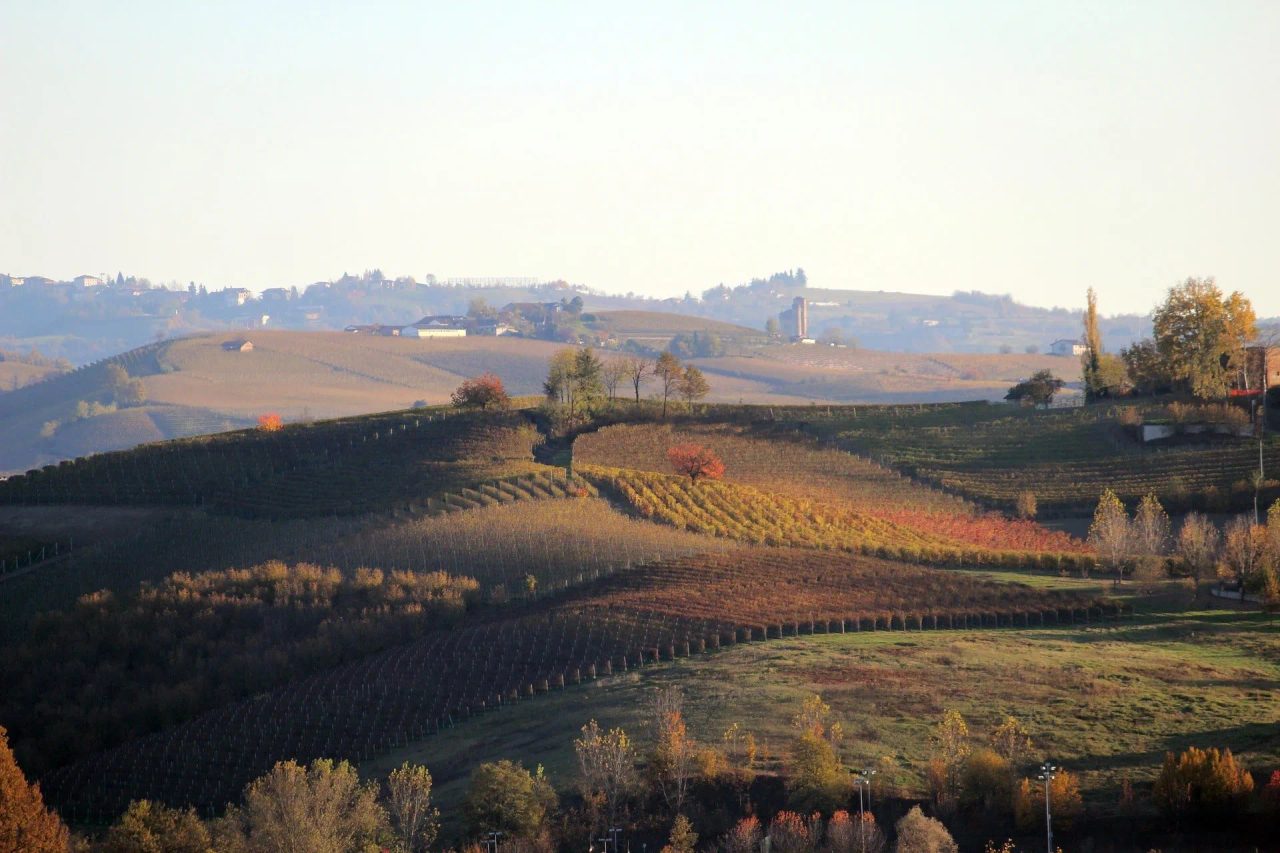
The area is divided into three parts, each with distinct geographical features and attractions.
In the Lower Langhe there is a higher concentration of vineyards and prized truffles. Its center is the city of Alba.
TheUpper Langhe, mostly wooded, extends to the border with Liguria. This is where the prized Piedmontese hazelnut IGP called “Tonda Gentile” is cultivated.
Finally, the Asti Langhe: located in the province of Asti, it is known for producing a delicious robiola cheese. Murazzano is its heart.
[activecampaign form=22 css=1]
Lower Langhe: Alba
To see and admire the abundance of the Langhe, it’s recommended to visit Alba.
The city lies on the banks of the Tanaro River and was once called the “City of a Hundred Towers”. Unfortunately, little remains of these fortifications, but its lively historic center has preserved its medieval character.
Alba was one of the driving centers of the partisan resistance in Piedmont. For this reason, Beppe Fenoglio dedicated The 23 Days of the City of Albato it, a collection of stories highly regarded by fans of resistance literature. There is a route that touches all the Fenoglio sites in the city: the historic center, the green area of San Cassiano, the hamlet of San Rocco d’Elvio, Altavilla, and Barbaresco.
But Alba is also, above all, the capital of the White Truffle, a unique ingredient that enriches many Piedmontese recipes such as agnolotti del plin and tajarin. Every year, in honor of this truffle specialty, the White Truffle Fairtakes place, an event with international appeal.
Alba also hosts a wine festival, Vinum, featuring numerous local wineries.
For this reason, the Langhe around Alba and nearby villages is also called the “Barolo Langhe“.
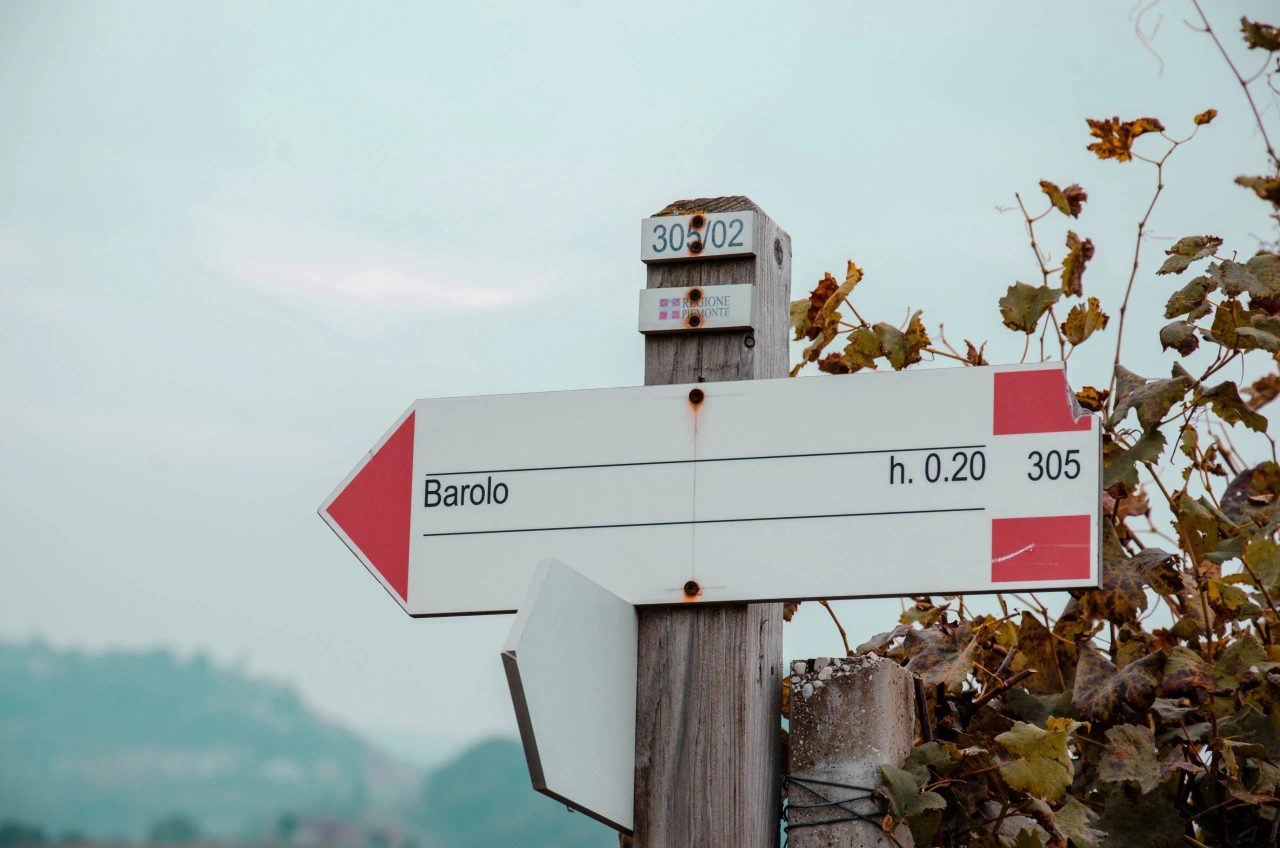
A Wine Tour Through the Most Beautiful Villages
A tour focused on Alba’s wines (Barbera, Dolcetto, Nebbiolo, Barbaresco, Moscato, and Barolo) and the most renowned wineries is a must if you want to see the Langhe.
Alongside the wine specialty of the “Barolo Langhe,” you’ll find iconic landscapes and places, especially villages.
In La Morra you can admire the colorful Barolo Chapel, a striking example of contemporary sacred art, unique of its kind. From the Belvedere, the highest point of the town, you can see the rows of vineyards, from which a majestic Cedar of Lebanon rises.
In Barolo, also surrounded by vineyards, you can taste the famous wine of the village in its streets and wine shops. At its summit is the Barolo Faletti Castle which houses the Wi-Mu, the wine museum, and the more unusual Corkscrew Museum.
Speaking of famous wines: the “Barolo Langhe” is also home to Barbaresco, named after the village of the same name. Its medieval atmosphere is enhanced by a 36-meter-high tower, the tallest in all of Piedmont. From this vantage point, you can enjoy a magnificent panorama stretching to Monviso.
A few kilometers from Alba, you can visit Neive, one of Italy’s most beautiful medieval villages, dominated by the Clock Tower and known for grappa production.
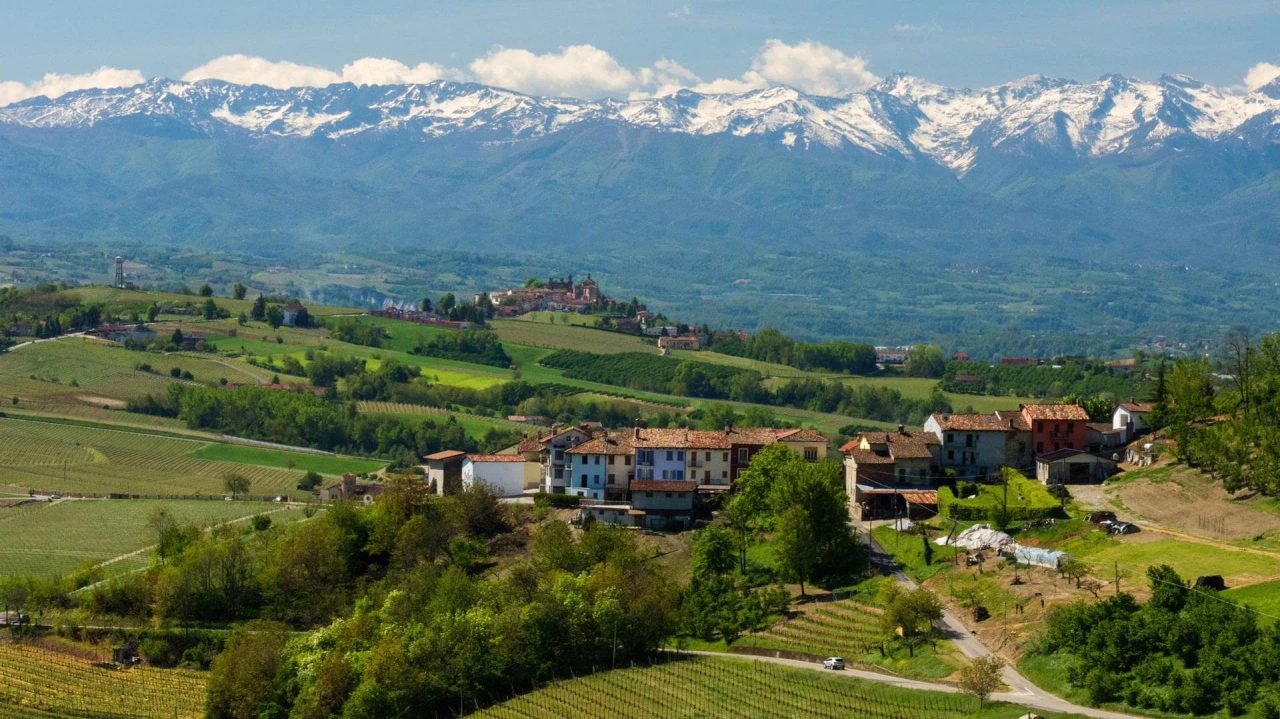
Upper Langhe and Asti Langhe
As mentioned, the Upper Langhe is known for its gastronomic specialties. Among its typical products is Murazzano DOP, a robiola cheese made from native sheep’s milk. And Murazzano is the center of this highland area, where the Piedmontese hazelnut “Tonda Gentile” is also cultivated, another popular local attraction.
The center of Murazzano features a historical point of interest: it is protected by a 33-meter-high medieval tower.
Near the Tower is the Langhe Safari Park. Half walkable and half drivable, it hosts 50 species of animals and 350 specimens including wolves, lions, and large herbivores.
In the Asti Langhe, we recommend visiting the medieval village of Canelli.
It’s worth visiting Canelli for its Gancia Castle, built in the 11th century, and the underground cellars that run beneath it. Here, Asti sparkling wine rests and ages, and both the village and its cellars have been declared a UNESCO World Heritage Site.
The Giant Benches of the LangheThe Big Benches, curious and colorful giant benches, are scattered throughout the Langhe. You can find them in Clavesana, Farigliano, Piozzo, Vezza d’Alba, and Carrù. These are among the most unique attractions to consider when wondering what to see in this area.
About two and a half meters tall, they are part of an art project by Chris Bangle, an American designer, with the idea to support local communities, tourism, and local excellence in the areas where they are installed. Indeed, besides being a striking example of contemporary art and design, they fascinate visitors who can climb on them to enjoy the view.
If you’re curious to see the Langhe and discover how to do it, try Meeters and its events. You’ll experience something new and stimulating in good company.