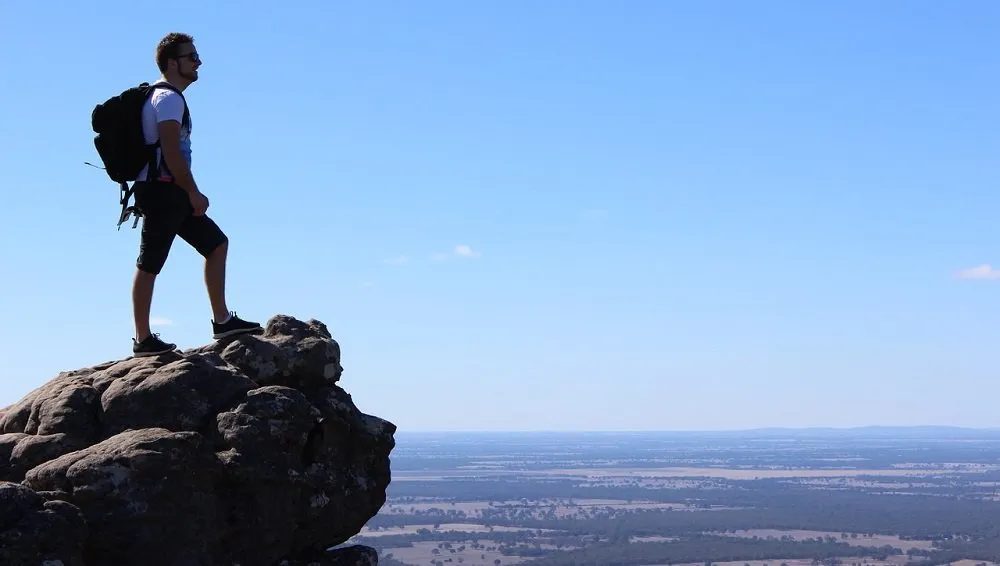
Breathing During Mountain Trekking
The mountain, its ascent and elevation changes represent a tough challenge for anyone who wants to undertake a trekking route with the goal of reaching the summit and admiring a breathtaking view. Mountain trekking not only allows you to achieve a state of mental well-being thanks to contact with nature and the chance to enjoy stunning vistas and pleasant encounters with local wildlife, but it also benefits your body. Although the mountain is an environment full of beauty and charm, for those out of shape or who haven’t exercised in a while,
its ascent can be challenging . To tackle the hike without getting out of breath, especially when carrying a backpack, diaphragmaticbreathing can be helpful. Thanks to it, you can face the climb avoiding unpleasant moments when energy runs out and your heart races.It’s important to note that walking in the
mountains can be tough even for fit people. However, thanks to their physical condition, they can manage their energy and handle the route practically without overexerting themselves or needing to stop frequently to rest and catch their breath. To reach the summit calmly, training alone is not enough: it’s also necessary to
make the best use of your mind , which must be clear and free from thoughts and distractions. In particular, to avoid excessive fatigue, it’s essential topay attention to your breathing The Importance of Proper Breathing.
When trying to tackle alpine elevation, to avoid breathlessness you need to
learn how to breathe correctly. Breathing slowly and deeply helps oxygen reach the cardiovascular system through the blood. To avoid feeling tired, it’s crucial that oxygen quickly reaches the heart during physical activity. Breathing slowly and deeply is useful for delivering oxygen effectively to the cardiovascular system through the blood. To avoid feeling fatigued, it is essential that oxygen reaches the heart quickly during physical activity.
practice diaphragmatic breathing , the same breathing we unconsciously use during sleep. Daily stress or anxiety tend to alter breathing and cause unnecessary fatigue.Practicing this type of breathing may initially feel difficult and forced but, over time and with some practice,
the process will become automatic . The diaphragm is a muscle located between the abdomen and the rib cage, also known as the home of the lungs.If the diaphragm is stiff during breathing, you won’t feel air reaching down to your belly: in this case, you’re using chest breathing. To breathe better without tiring yourself, you need instead to
If the diaphragm is stiff during breathing, you won’t feel the air reaching straight down to the belly: in this case, chest breathing is being used. To breathe better without getting tired, it is necessary instead to . Thanks to this type of breathing, you can tire less because a greater amount of oxygen is channeled into the lungs.Helpful Tips to Avoid Overexertion
Start Slowly
Besides diaphragmatic breathing, there are other good habits to adopt to improve your endurance during walking, in the mountains and beyond. First, it’s recommended to
Besides diaphragmatic breathing, there are other good habits you can adopt to improve your endurance while walking, whether in the mountains or elsewhere. First of all, it is recommended to walking slowly and try to coordinate your breath with your movement. Second, maintaining proper posture is essential: keep your back straight, shoulders relaxed, and chin parallel to the ground. This not only helps prevent muscle pain but also facilitates more efficient breathing. Additionally, hydration plays a crucial role; sipping water frequently helps keep muscles hydrated and prevents cramps and fatigue.
Another useful tip is using trekking poles, which not only provide support but help distribute effort between legs and arms, allowing you to walk longer without excessive fatigue. Finally, it’s important to listen to your body and take regular breaks to recover energy and enjoy the scenery, making the experience more pleasant and sustainable in the long run.
Another useful tip is to use trekking poles, which not only provide support but also help distribute the effort better between legs and arms, allowing you to walk longer without excessive fatigue. Finally, it’s important to listen to your body and take regular breaks to recover energy and enjoy the scenery, making the experience more pleasant and sustainable in the long run.
To do this, inhale through your nose on the first step and exhale through your mouth on the second: over time, this will create perfect coordination between breathing and movement.
To achieve this, you need to inhale through your nose on the first step and exhale through your mouth on the second: by doing so, over time you will create perfect coordination between breathing and movement. is very important as it humidifies and warms the cold, dry air you breathe in. On flat terrain, you can then try to increase your step count and reduce deep breaths. Calm Your Heart Rate
Controlled breathing allows you to
calm an accelerated heart rate and recover easily from facial redness once you reach the summit. Thanks to diaphragmatic breathing, you can enjoy a fully relaxing experience , enjoying nature and the view without overexerting yourself., enjoying nature and the scenery without getting too tired.