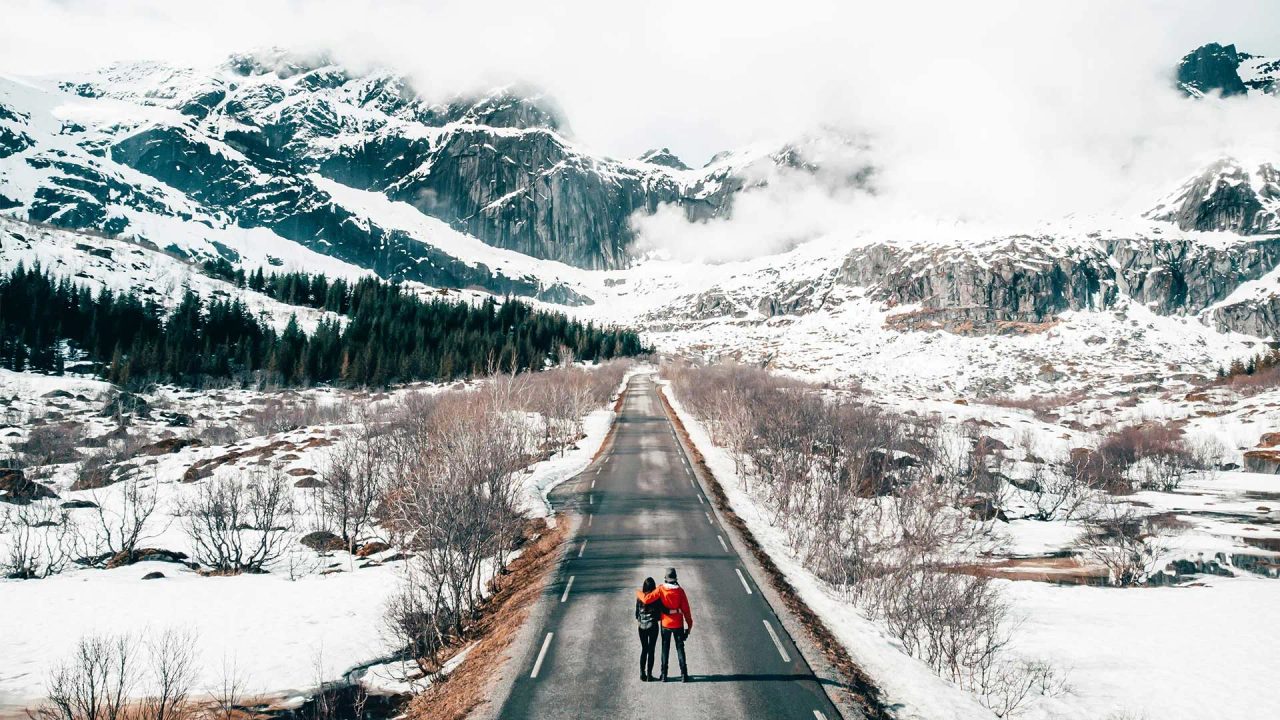
The worst part of any trip, no matter what kind, is packing: deciding what to wear in the coming days, predicting temperatures and activities. And when heading to the mountains, this task becomes even more challenging!
For many, a mountain vacation means a ski week, with sports, skiing, and snowboarding. So the suitcase fills with technical clothing ideal for excursions and activity. But how to dress for snow without skiing? What clothes to bring if you don't plan to do sports? How many layers to wear to avoid freezing while still enjoying the beautiful mountain landscapes without chattering teeth? To answer these and many other questions, read our practical guide to dressing for snow!
How to Dress for the Mountains
It's all too easy to dress inappropriately in the mountains. Those who plan only to take walks, relax, and enjoy good food and snowy views might think heavy clothing isn't necessary or that a few wool sweaters will suffice to stay warm. In reality, whatever activities you plan, there's only one correct way to dress for snow: layering— dressing in layers!
Indeed, in winter in the mountains weather conditions can change very quickly, not to mention the risk of suddenly falling ill when moving from the tropical temperatures of hotels and indoor spaces to subzero outdoor temperatures! It's therefore crucial to wear multiple layers to control and manage our body temperature without ever feeling too cold or too hot.
By adopting this method, we can add or remove a layer as needed. But to do this properly, remember to add or remove layers as soon as you feel too hot or too cold. In the first case, you risk sweating and wetting your clothes; in the second, lowering your body temperature too much, negating the purpose of thermal clothing!
When dressing in layers, each layer is important, not just the outer one, so wearing a good jacket alone isn't enough if the inner protection is missing. Let's see what the different layers are for dressing for snow without skiing and which materials to prefer, without sacrificing style!

What Clothes to Bring
The long-awaited moment to pack has arrived, but don't worry, with our tips it will be easier and faster than you think! You don't need to wear twenty layers to be comfortable, two or three are enough, as long as they're the right clothes. Here's a short list with some ideas on how to dress for snow without skiing and what to avoid:
Thermal Underwear
The innermost layer, in direct contact with bare skin, is the most important. It manages and maintains body temperature, so even if you won't be skiing, thermal underwear is essential.
Again, don't worry, we're not talking about itchy wool underwear and tights! Thermal underwear means a set consisting of a long-sleeve top and leggings to be worn in every situation.
Wool sets are the best choice for most activities. But if you plan long walks in the snow, even without skiing or snowboarding, we recommend technical fabric underwear , which will keep you warmwithout making you sweat unnecessarily , plus ensuring high comfort!The same applies to
socks . Wool socks are great for indoors or short walks, while technical socks are perfect for excursions.Sweatshirts, Sweaters, or Fleece?
Sweatshirts, sweaters, and fleece are all excellent garments to pack; you just need to know when and how to wear them!
A more “urban” outfit with a
sweatshirt or wool sweater is perfect for indoor wear or short walks. For longer periods on the snow, even just taking photos, fleece is better. Fleece does not retain moisture and dries very quickly, without losing heat. Depending on your needs, bring a lighter microfleece to wear over thermal underwear and a heavier fleece to wear over the other two layers. PantsIf you plan to spend all your days indoors without stepping outside, you can pack jeans. Otherwise, forget about them until you return!
The best pants for the mountains are typical “snow pants,”
If your intention is to spend all your days indoors without ever stepping outside, then you can pack jeans. Otherwise, forget about them until you return!
: an inner fleece-padded layer and an outer layer that is waterproof, windproof, and water-repellentWith this highly breathable garment, you can walk on snow as much as you want without risking getting wet or sweaty. Which Jacket to Choose?.
Among the most common questions about how to dress for snow without skiing are those about jackets and coats. The outer layer is essential to not undo the work of the inner layers, so
choose your jacket very carefully
Among the most common questions about how to dress for the snow without skiing, those concerning jackets and coats stand out. The outer layer is essential so as not to undo the work done with the inner layers, and therefore avoid down jackets.
. Although warm, down absorbs both external moisture and body moisture. Synthetic fillings prevent heat loss.As with pants, make sure the jacket's outer material is water-repellent. Shoes
If you don't want to waste all your previous efforts, forget boots and sneakers! On snow, only two types of shoes are suitable:
snow boots or après-ski boots
Après-ski or moon boots are technical footwear designed specifically for snow, very comfortable, with cushioned soles, keeping feet warm and providing!
excellent grip on the ground, even on ice. Being generally tall, they support the foot and ankle well, fully insulating from the outside.Hiking boots are comfortable and warm but fit differently, with much stiffer soles and thicker uppers. They are
specialized footwear for hiking, both trekking and mountaineering, providing excellent support and protection from impacts.Both hiking boots and moon boots are excellent for snow. They have a significant cost, but are great investments. Choose based on the experiences you plan.
Other Accessories To complete your mountain look, a few items are still missing. First, don't forget yoursunglasses
. Even in winter, when days are mostly cloudy, sunglasses are essential in the mountains. The sunlight can be particularly
intense and dangerous on snow because rays reflect off wet and icy surfaces.. Even though we are in the middle of winter and the days are mostly cloudy, sunglasses in the mountains are a must. In fact, sunlight can be particularly hat for relaxed occasions, but on the snow, prefer
wool beanies that keep your ears warm. Never forget a scarf made of wool or fleece depending on your activities. For
gloves, choose padded ones with a waterproof outer layer if you plan to hike.Finally, bring a swimsuit . Many mountain resorts boast natural thermal springs, and there's nothing better than a warm bath after a day in the snow!
This concludes our guide on how to dress for snow without skiing. We hope we've answered all your questions and helped you pack your suitcase perfectly. Now all that's left is to go! For tips and ideas on the best winter destinations, check out the
events Meeters organizes in Italy and worldwide to travel with new friends!. We hope we have answered all your questions and helped you prepare your suitcase in the best way. Now all that's left is to set off! For tips and ideas on the best winter destinations, take a look at the events that Meeters organizes in Italy and around the world to travel in the company of new friends!